
Humidity control is essential for industrial and commercial environments to prevent moisture-related issues. Refrigerant, desiccant, and hybrid dehumidifiers use different technologies to remove moisture.
Understanding differences in performance, energy consumption, and applications helps users choose the most suitable dehumidification solution.
Refrigerant vs Desiccant vs Hybrid Dehumidifier: Key Differences
| Comparison Factor | Refrigerant Dehumidifier | Desiccant Dehumidifier | Hybrid Dehumidifier |
| Working Principle | Cooling & condensation | Moisture adsorption | Cooling + adsorption |
| Temperature Range | Medium/high temp. | Low/normal temp. | Wide range |
| Humidity Capability | 30–60% RH | 1–40% RH | 10–60% RH |
| Initial Cost | $500–1500 | $800–$4000 | $600–5000+ |
| Operating Cost | Low | Higher | Medium |
| Energy Source | Electricity | Electricity + heat | Electricity + heat |
| Investment Level | Low | High | Medium–High |
| Maintenance | Low–Medium | Medium–High | High |
| Low Temperature Performance | Limited | Excellent | Excellent |
The actual cost depends on dehumidification capacity, airflow volume, control requirements, installation conditions, and customization level.
How Refrigerant Dehumidifiers Work
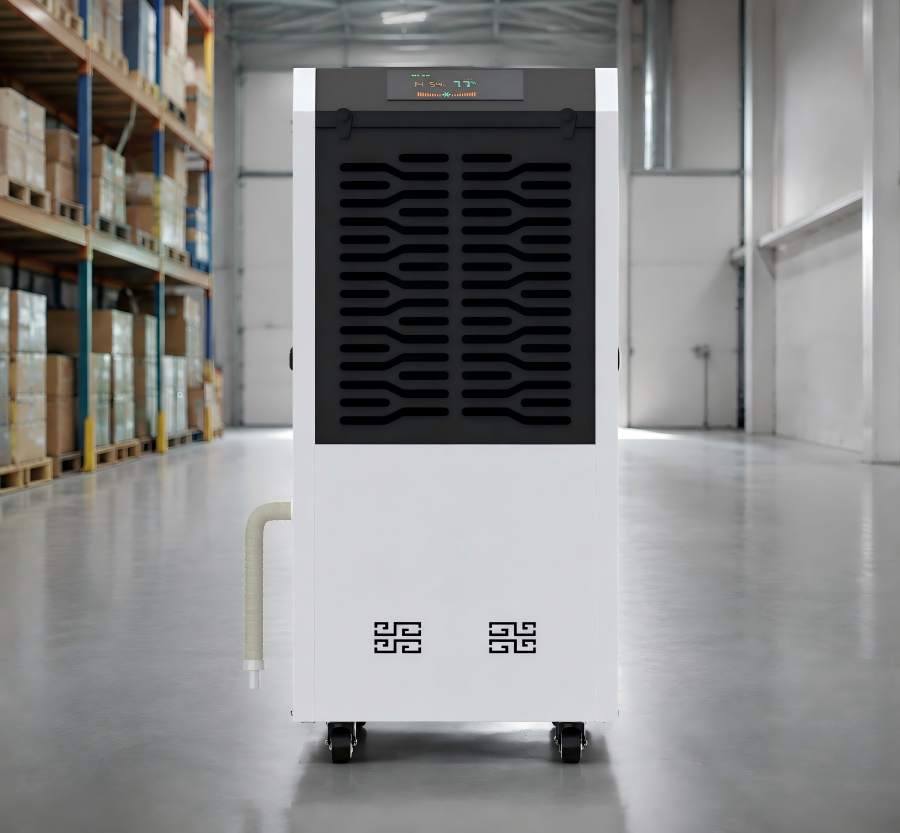
Refrigerant dehumidifiers use cooling coils to condense moisture from humid air, then discharge dry air back into the environment.
The main process includes:
- Humid air intake
- Cooling and condensation
- Water collection
- Dry air circulation
Because they rely on condensation, refrigerant dehumidifiers perform best in medium and high-temperature environments with moderate humidity requirements.
Advantages of Refrigerant Dehumidifiers
High Efficiency in Normal Temperature Conditions
Refrigerant dehumidifiers are one of the most commonly used solutions for general humidity control because they provide good performance in environments with moderate temperatures.
When air temperature is relatively high, it contains more moisture. This allows the refrigeration system to remove water efficiently through condensation.
Typical applications include:
- Industrial workshops
- Storage warehouses
- Underground spaces
- Swimming pool rooms
- Commercial facilities
For these environments, refrigerant technology provides a balance between moisture removal capacity, energy consumption, and equipment investment.
Lower Initial Investment
Compared with desiccant and hybrid systems, refrigerant dehumidifiers usually have a simpler structure.
The main components include:
- Compressor
- Evaporator
- Condenser
- Fan system
- Drainage system
- Control system
Because the technology is mature and widely used, refrigerant systems generally require lower initial investment and simpler maintenance.
This makes them suitable for customers looking for reliable humidity control without complex system requirements.
Suitable for Large Moisture Loads
Refrigerant dehumidifiers are effective when the main challenge is removing large amounts of moisture from warm air.
For example, manufacturing facilities, warehouses, and swimming pool environments often experience high humidity loads. Refrigeration-based systems can continuously remove moisture while maintaining comfortable humidity levels.
Limitations of Refrigerant Dehumidifiers
Reduced Performance at Low Temperatures
The biggest limitation of refrigerant dehumidifiers is reduced efficiency in cold environments.
Because the system depends on cooling air below the dew point, lower temperatures reduce the moisture condensation effect. Frost may also form on the evaporator coil, requiring defrost operation.
For example:
- Warm environments above 20°C: excellent performance
- Cool environments around 10°C: reduced efficiency
- Low-temperature environments below 5°C: limited application range
For cold storage facilities or low-temperature production areas, desiccant technology may provide better performance.
Limited Ultra-Low Humidity Capability
Refrigerant dehumidifiers are suitable for normal humidity control but are generally not designed for extremely low humidity requirements.
Applications requiring humidity levels below 20% RH often need adsorption technology because condensation becomes less effective when the moisture content in air is already very low.
How Desiccant Dehumidifiers Work
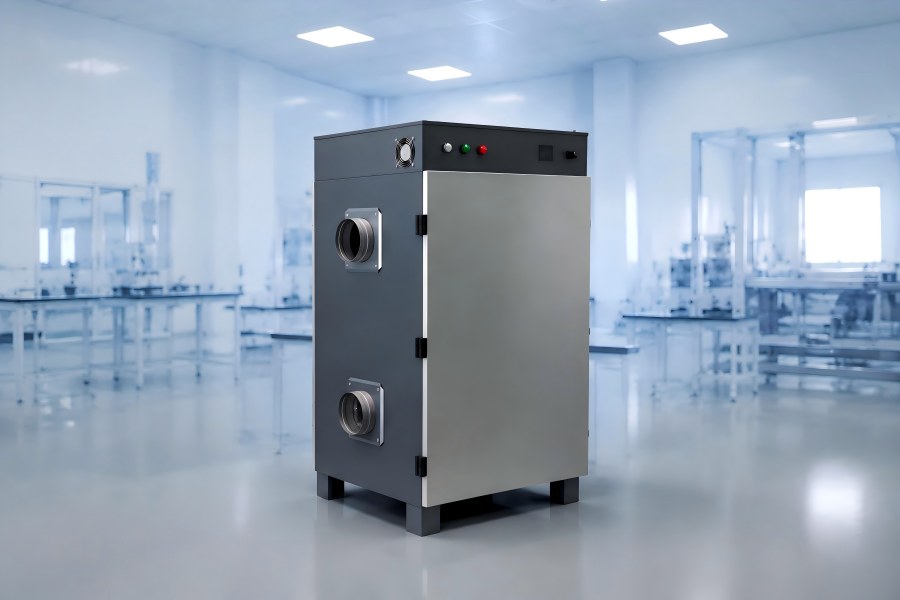
Desiccant dehumidifiers remove moisture through adsorption. Desiccant materials such as silica gel absorb water vapor, which is later released through regeneration for continuous operation.
The basic process includes:
- Humid air enters the adsorption area
- Moisture is captured by desiccant material
- Dry air is supplied to the application area
- Heated regeneration air removes accumulated moisture
Because moisture removal does not depend on cooling, desiccant dehumidifiers maintain stable performance in low-temperature and low-humidity environments.
Advantages of Desiccant Dehumidifiers
Excellent Low-Temperature Performance
Desiccant systems are highly suitable for cold environments because they do not rely on condensation.
They can effectively remove moisture even when temperatures approach freezing conditions.
Common applications include:
- Cold storage
- Pharmaceutical warehouses
- Food processing facilities
- Chemical storage
- Battery manufacturing
By preventing condensation and frost formation, desiccant systems help maintain stable operating conditions.
Achieving Very Low Humidity Levels
Desiccant dehumidifiers offer a major advantage in achieving and maintaining very low humidity levels.
While refrigerant systems typically handle moderate humidity ranges, desiccant technology can achieve much lower RH levels.
Typical applications include:
- Lithium battery production
- Electronic manufacturing
- Precision laboratories
- Pharmaceutical production
In these industries, even small amounts of moisture may affect product quality, production stability, or material performance.
Stable Performance Under Variable Conditions
Desiccant dehumidifiers are less affected by temperature changes compared with refrigeration systems.
This makes them suitable for facilities where humidity requirements must remain stable throughout different seasons or production stages.
Limitations of Desiccant Dehumidifiers
Higher Energy Consumption
The regeneration process requires extra energy because the desiccant must be heated to release absorbed moisture.
Energy sources may include:
- Electric heating
- Steam
- Natural gas
- Hot water
Therefore, desiccant systems usually have higher operating costs compared with standard refrigerant systems.
Higher Equipment Cost
Because desiccant systems contain additional components such as:
- Desiccant rotor
- Regeneration section
- Heating system
- Air control system
their initial investment is generally higher.
For applications that only require standard humidity control, a refrigerant system may provide a more economical solution.
How Hybrid Dehumidifiers Work
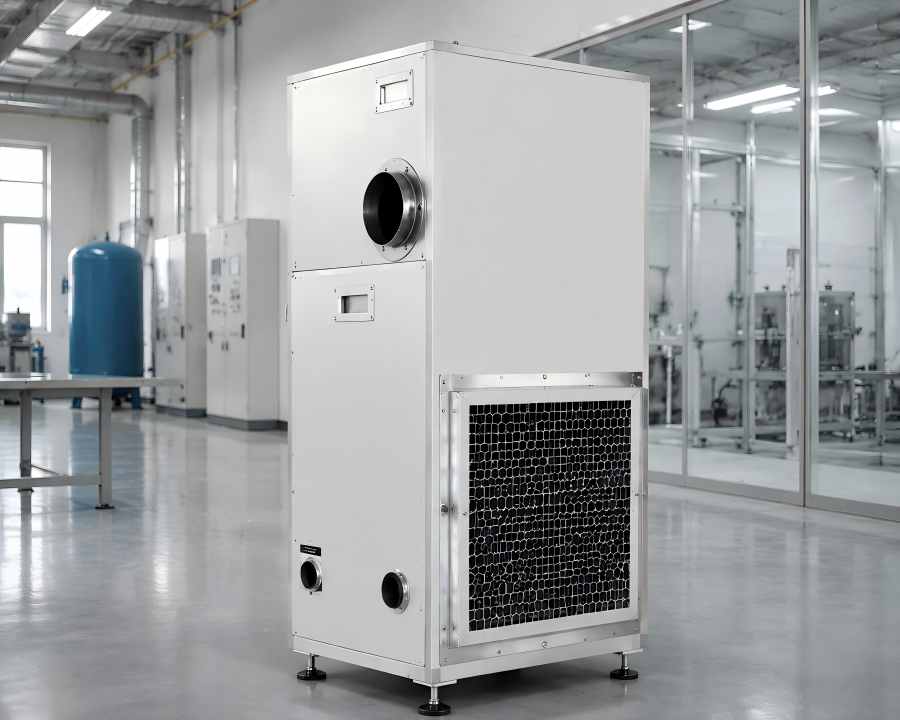
Hybrid dehumidifiers combine refrigeration and desiccant technologies into one system.
The refrigeration section removes moisture efficiently from humid air, while the desiccant section provides additional drying when lower humidity levels are required.
The combined process usually includes:
- Refrigeration pre-dehumidification
- Additional moisture adsorption
- Final humidity adjustment
By using both technologies together, hybrid systems provide wider operating flexibility.
Advantages of Hybrid Dehumidifiers
Wider Operating Range
Hybrid dehumidifiers can operate effectively across a broader range of temperatures and humidity requirements.
They are suitable for applications where conditions change frequently or where both high moisture removal and precise humidity control are required.
Improved Energy Efficiency Compared with Desiccant-Only Systems
Because refrigeration can remove a large portion of moisture first, the desiccant section does not need to handle the entire moisture load.
This staged approach can reduce regeneration energy compared with using a desiccant system alone.
Better Humidity Control Accuracy
Hybrid systems are suitable for environments requiring both capacity and precision.
Typical applications include:
- Pharmaceutical facilities
- Precision manufacturing
- Research laboratories
- High-value storage areas
Limitations of Hybrid Dehumidifiers
More Complex System Structure
Since hybrid systems combine two technologies, their design and control systems are more complicated.
They require coordination between:
- Refrigeration circuits
- Desiccant components
- Airflow systems
- Control software
Higher Initial Investment
Hybrid dehumidifiers generally require higher investment than standard refrigerant systems.
However, for applications requiring flexible operation and strict humidity control, the additional investment may provide better long-term value.
Which Dehumidifier Is Suitable for Different Applications?
Different industries require different levels of humidity control. Selecting the right dehumidification technology depends mainly on operating temperature, required humidity level, moisture load, and production conditions.
Warehouses and Storage Areas
For general warehouses and storage facilities, refrigerant dehumidifiers are usually the most practical choice.
Most storage environments require humidity control within approximately 40–60% RH. Under normal indoor temperatures, refrigerant systems can efficiently remove moisture while maintaining relatively low operating costs.
Typical applications include:
- General product storage
- Raw material warehouses
- Packaging storage areas
- Commercial storage facilities
However, sensitive products such as pharmaceuticals, electronics, and chemicals may require more precise humidity control. In these cases, desiccant or hybrid solutions may provide better protection.
Cold Storage Facilities
Cold storage environments create different challenges because low temperatures reduce the effectiveness of refrigeration-based moisture removal.
When temperature decreases, air contains less moisture, and condensation becomes more difficult. Frost and ice formation may also affect equipment operation.
Desiccant dehumidifiers are often preferred for cold storage applications because they can remove moisture without depending on condensation.
Benefits include:
- Reduced frost formation
- Better low-temperature performance
- Improved product protection
- More stable humidity control
Typical applications include:
- Frozen food storage
- Refrigerated warehouses
- Cold logistics centers
- Temperature-controlled storage rooms
Pharmaceutical and Laboratory Applications
Pharmaceutical production and laboratory environments often require strict humidity control because moisture can affect product stability, testing accuracy, and manufacturing processes.
The appropriate technology depends on humidity requirements:
- Refrigerant dehumidifiers are suitable for general environmental control.
- Desiccant systems are well suited to low-humidity applications.
- Hybrid systems provide flexible control for complex environments.
Applications may include:
- Pharmaceutical storage
- Laboratory rooms
- Clean production areas
- Medical product manufacturing
For facilities requiring precise humidity stability, hybrid or desiccant systems often provide better long-term performance.
Battery and Electronic Manufacturing
Advanced manufacturing industries often require very low humidity because moisture can directly affect material performance and product reliability.
Lithium battery production is a typical example. Excess moisture may influence electrode materials, reduce product consistency, and affect production efficiency.
Desiccant dehumidifiers are a common choice for these applications, as they can maintain very low humidity levels.
Typical applications include:
- Lithium battery production rooms
- Semiconductor manufacturing
- Electronic assembly areas
- Precision component production
Hybrid systems may also be considered when both high moisture removal capacity and precise humidity control are required.
Swimming Pools and Commercial Buildings
Swimming pools, hotels, offices, and public facilities usually focus on preventing condensation, maintaining indoor comfort, and protecting building structures.
Refrigerant dehumidifiers are commonly used in these environments because they provide:
- Efficient moisture removal
- Lower equipment cost
- Simple maintenance
- Reliable operation
Typical applications include:
- Indoor swimming pools
- Fitness centers
- Hotels
- Office buildings
- Exhibition halls
For these applications, ultra-low humidity is usually unnecessary, making refrigerant systems a cost-effective solution.
How to Choose the Right Dehumidifier: Refrigerant, Desiccant, or Hybrid?
Selecting the right dehumidification system requires considering several key factors.
1. Temperature of Operation
One of the most crucial selecting criteria is temperature.
Over 20°C
Refrigerant dehumidifiers are usually the most efficient choice because warm air contains more moisture and condensation works effectively.
Typical applications:
- Warehouses
- Workshops
- Commercial buildings
5–20°C
Both refrigerant and desiccant technologies may be considered depending on humidity requirements.
For moderate humidity control, enhanced refrigerant systems may be sufficient. For lower humidity targets, desiccant systems provide better performance.
Below 5°C
Desiccant dehumidifiers are generally more suitable because moisture removal does not depend on cooling and condensation.
2. Required Humidity Level
The target humidity level directly affects technology selection.
| Required Humidity Range | Recommended Technology |
| 40–60% RH | Refrigerant Dehumidifier |
| 20–40% RH | Refrigerant or Hybrid Dehumidifier |
| Below 20% RH | Desiccant Dehumidifier |
| Ultra-low humidity applications | Desiccant or Hybrid System |
For general industrial humidity control, refrigeration technology is usually sufficient.
For sensitive materials and demanding production environments, adsorption technology provides more precise control.
3. Moisture Load
The amount of moisture that needs to be removed also affects equipment selection.
For environments with high moisture loads and normal temperatures, refrigerant dehumidifiers usually provide excellent efficiency.
Examples:
- Swimming pools
- Large warehouses
- Manufacturing workshops
When the application requires both high moisture removal capacity and low humidity output, hybrid systems can provide a better balance.
They allow refrigeration technology to handle the initial moisture load while the desiccant section achieves further drying.
4. Energy Availability
Energy sources should also be considered, especially for desiccant systems.
Refrigerant dehumidifiers mainly rely on electricity to operate compressors and fans.
Desiccant systems require regeneration energy, which can come from:
- Electricity
- Steam
- Natural gas
- Hot water
Facilities with available waste heat, steam systems, or other thermal energy sources may achieve better operating economics with desiccant technology.
Hybrid systems require both electrical and thermal energy depending on system configuration.
5. Initial Investment and Long-Term Cost
The initial equipment cost is a key factor, but other factors should also be considered.
A lower-cost refrigerant system may become unsuitable if it cannot achieve the required humidity level.
Similarly, a higher-cost desiccant or hybrid system may provide better value when product protection, production stability, and humidity accuracy are critical.
A simple comparison:
| Factor | Refrigerant | Desiccant | Hybrid |
| Initial Cost | Lower | Higher | Medium–High |
| Energy Cost | Lower in warm conditions | Higher due to regeneration | Medium |
| Humidity Precision | Moderate | High | High |
| Low Temperature Performance | Limited | Excellent | Excellent |
| Application Flexibility | Medium | High | Highest |
Maintenance Requirements Comparison
Maintenance requirements also influence the long-term performance of a dehumidification system.
Refrigerant Dehumidifier Maintenance
Refrigerant systems generally have simpler maintenance requirements.
Common maintenance tasks include:
- Cleaning air filters
- Checking refrigerant levels
- Inspecting coils
- Maintaining drainage systems
- Checking compressor operation
Because the technology is widely used, replacement parts and service support are usually easier to obtain.
Desiccant Dehumidifier Maintenance
Desiccant systems require more attention because they include additional components.
Maintenance usually involves:
- Checking desiccant rotor condition
- Inspecting regeneration heaters
- Cleaning filters
- Checking airflow balance
- Maintaining drive systems
Proper maintenance is important for maintaining adsorption performance.
Hybrid Dehumidifier Maintenance
Hybrid systems combine both refrigeration and desiccant components.
Maintenance may include:
- Refrigeration system inspection
- Desiccant rotor maintenance
- Heater inspection
- Control system checks
- Airflow verification
Although maintenance requirements are higher, hybrid systems provide greater flexibility for demanding applications.
Practical Selection Guide
A simple selection approach can help users quickly identify the most suitable technology:
Choose a refrigerant dehumidifier when:
- Temperature is above 20°C
- Humidity requirement is moderate
- Initial investment needs to be controlled
- Large moisture loads must be removed efficiently
Choose a desiccant dehumidifier when:
- Temperature is low
- Very low humidity is required
- Product sensitivity to moisture is high
- Stable humidity control is critical
Choose a hybrid dehumidifier when:
- Operating conditions change frequently
- Both high capacity and low humidity are required
- Energy efficiency and flexibility are important
- A single technology cannot meet the application requirements
Selecting the right dehumidification technology helps reduce operating costs, maintain stable humidity, and protect products. The best solution depends on actual conditions and humidity requirements.