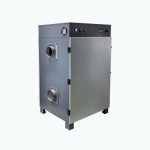
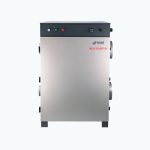
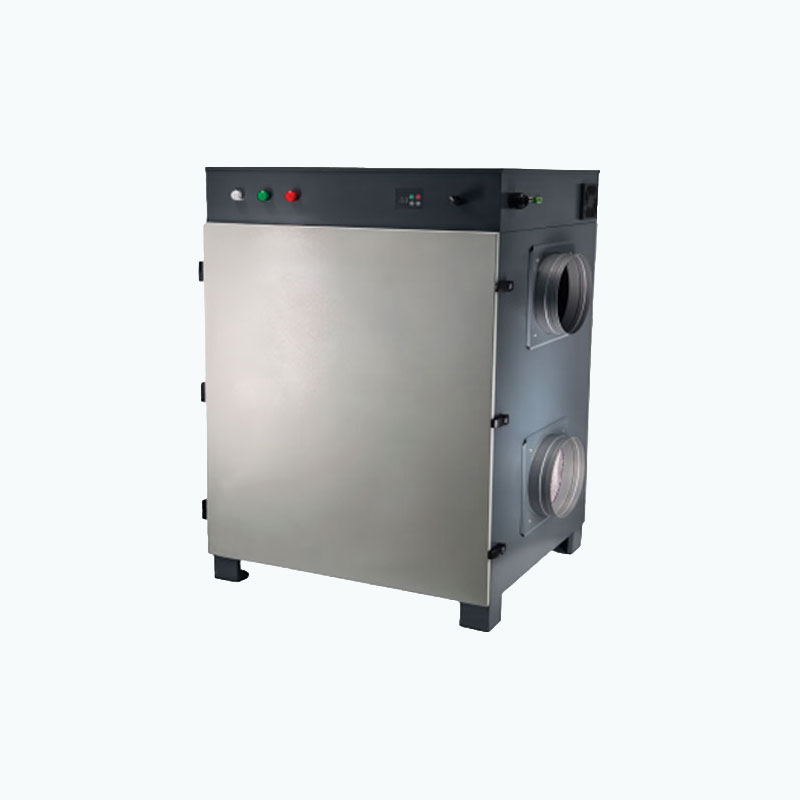
How the Desiccant Dehumidification System Works
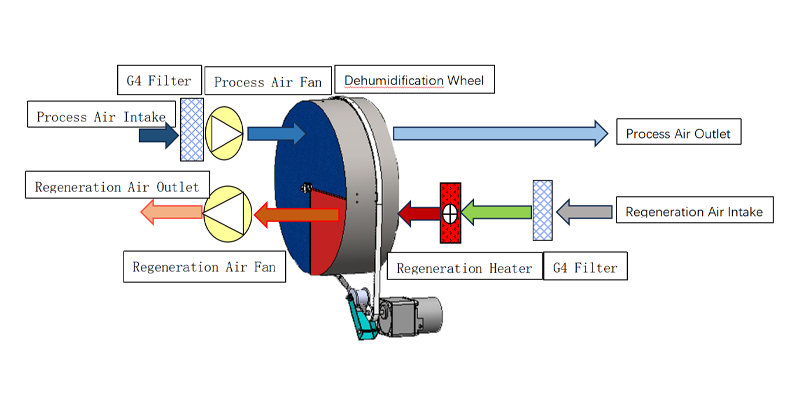
1. Air Intake:
Process air is filtered by the G4 filter and delivered toward the desiccant wheel by the process air fan.
2. Air Drying:
As air passes through the wheel, moisture is adsorbed by the desiccant material, producing a continuous supply of dry air.
3. Wheel Regeneration:
Filtered regeneration air is heated and passed through the moisture-loaded section of the rotating wheel to release the absorbed moisture.
4. Moisture Discharge:
The regeneration fan carries the released moisture outside as warm, humid exhaust air, allowing the wheel to continuously recover its adsorption capacity.
Product Parameters
| Model | Dehumidification Capacity (20°C, 60% RH) | Power Supply | Rated Power | Maximum Power | Rated Current |
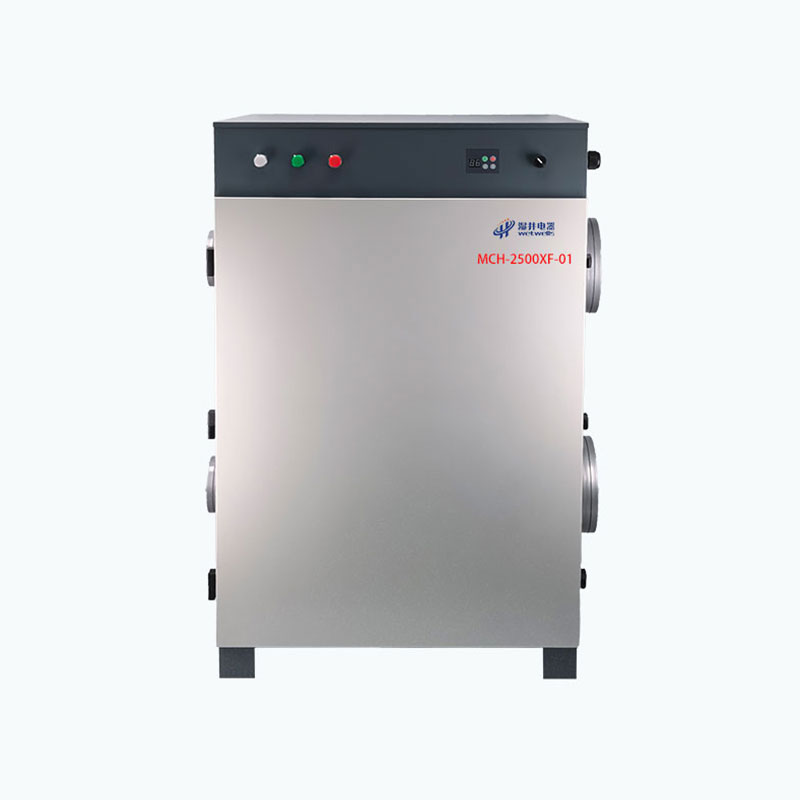
| MCH-2500XF-01 | 15 kg/h | 380V / 50Hz | 20 kW | 21 kW | 38 A |
| Process Airflow | Reactivation Airflow | Process Air External Static Pressure | Reactivation Air External Static Pressure | Process Air Duct Diameter | Reactivation Air Duct Diameter |
| 2500 m³/h | 900 m³/h | 400 Pa | 280 Pa | Φ400 mm × 2 | Φ250 mm × 2 |
| Desiccant Rotor Size | Filtration Device | Operating Temperature | Dimensions (L×W×H) | Weight | Humidity Setting Range |
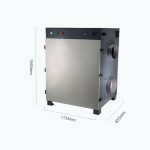
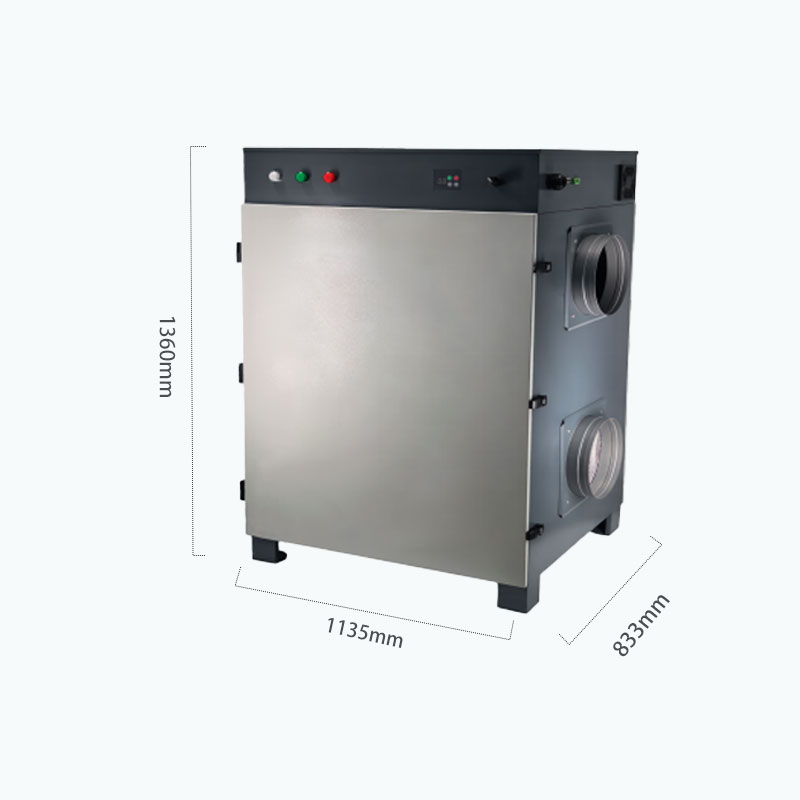
| 700 × 200 mm | Primary Filter | -10°C–50°C | 1135 × 833 × 1360 mm | 280 kg | 5%–95% RH |
Airflow & Control Features
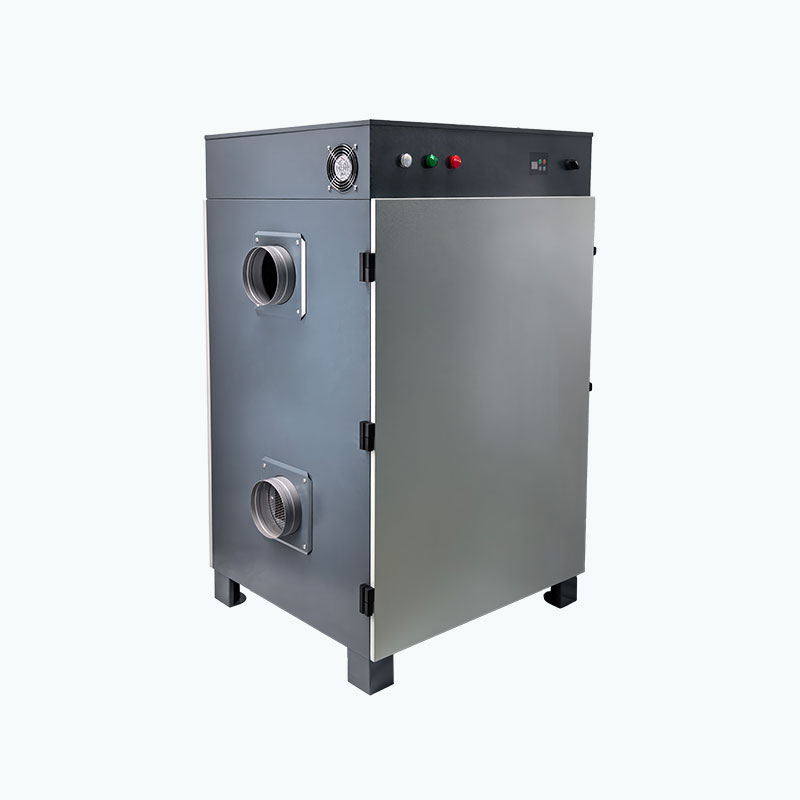
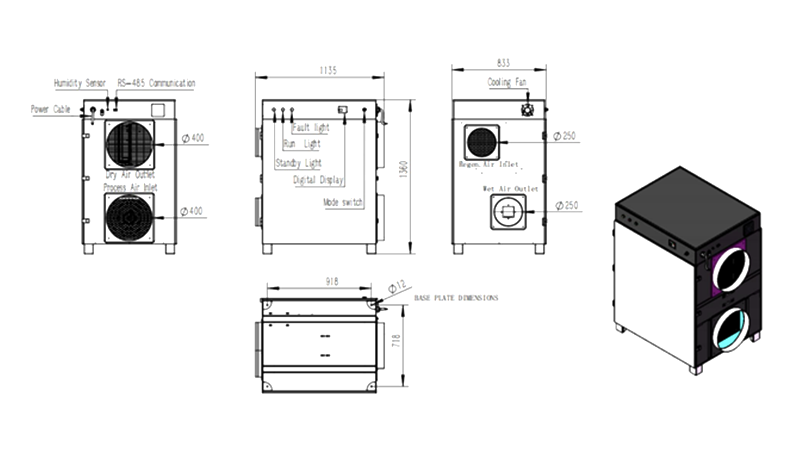
- Air Handling: Ø400 mm process and Ø250 mm regeneration connections support high-volume airflow and moisture exhaust.
- Smart Monitoring: Humidity sensor, digital display, and RS-485 communication support monitoring and system integration.
- Easy Operation: Run, standby, and fault indicators with a mode switch simplify control.
- Stable Design: Integrated cooling fan and Ø12 mounting holes support reliable operation and secure installation.
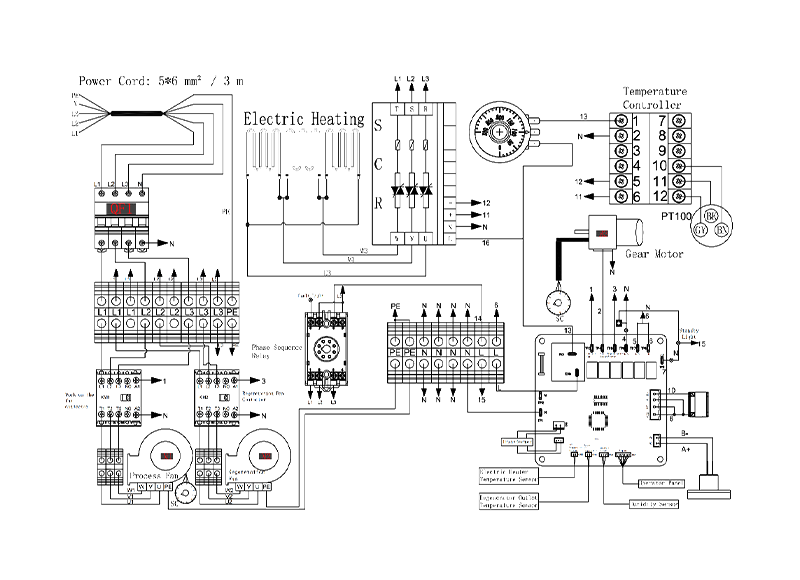
Circuit Diagram