
Grow Room Dehumidifier
Our grow room dehumidifiers provide precise humidity control for commercial cultivation, hydroponics, vertical farms, and controlled growing environments.
We support customized capacity, airflow, drainage, controls, and installation options to maintain stable RH, protect crops, and improve cultivation efficiency.
Grow Room Dehumidifier Series
Our grow room dehumidifiers are available for different room sizes, moisture loads, installation conditions, and humidity control requirements.
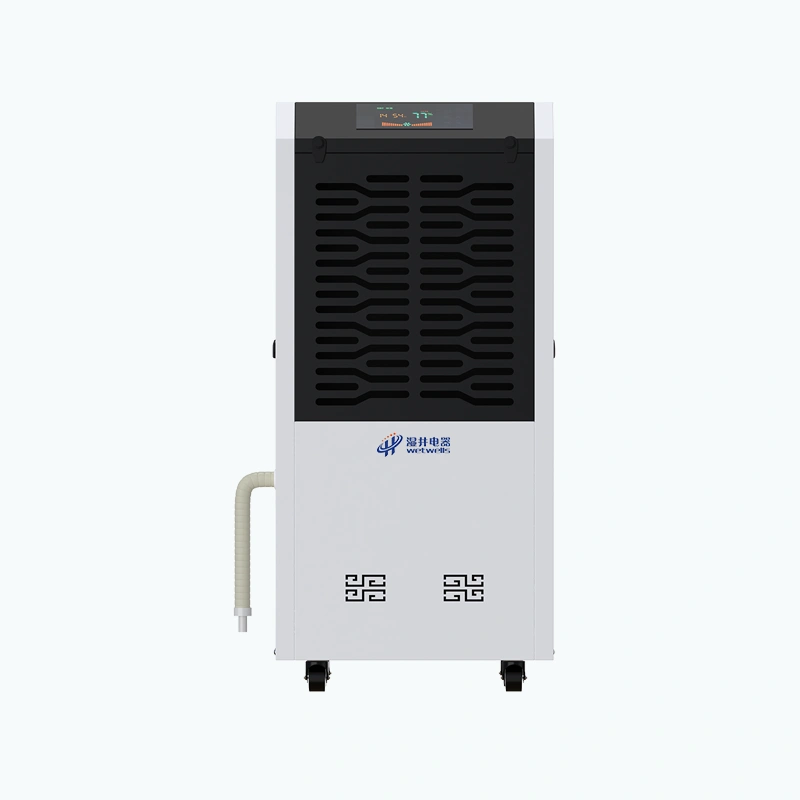
Small Grow Room Dehumidifier
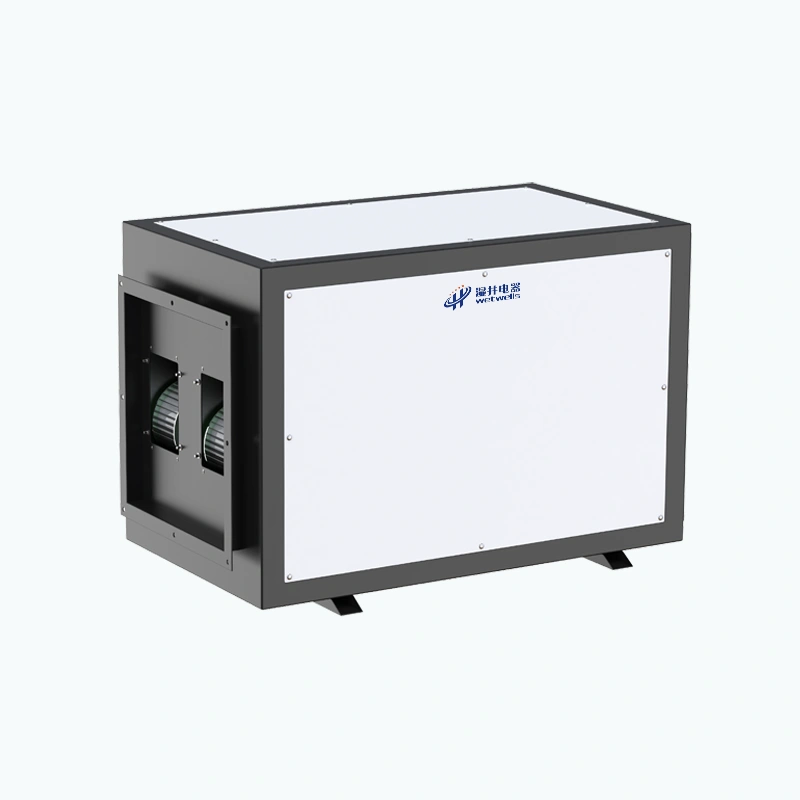
Commercial Grow Room Dehumidifier
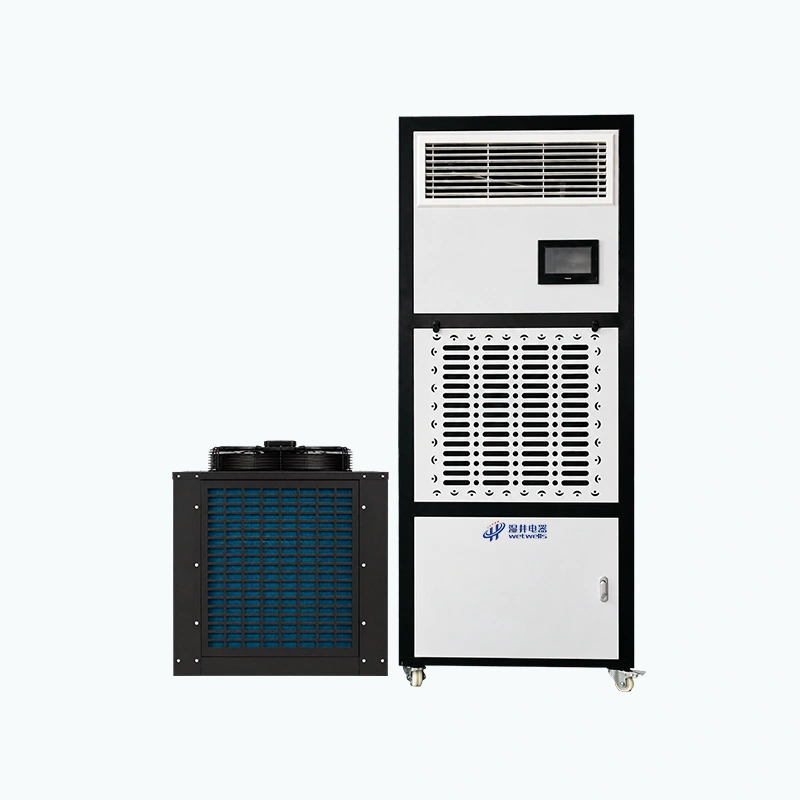
Industrial Grow Room Dehumidifier
Grow Room RH Requirements by Growth Stage
We provide tailored humidity control across every growth stage to maintain stable RH, manage moisture loads, and support healthy plants.
Applications We Serve
Our dehumidifiers for grow rooms provide reliable humidity control for commercial cultivation, hydroponic growing, vertical farming, and plant research environments.
Indoor Cannabis Cultivation
Maintain stable humidity levels to prevent mold, improve plant health, and support consistent cultivation conditions.
Hydroponic Growing Room
Control moisture from nutrient solutions and evaporation to maintain optimal humidity for hydroponic plant growth.
Vertical Farming Facility
Provide reliable humidity management for multi-layer farming systems with dense plants and continuous operation.
Plant Research Laboratory
Maintain precise humidity conditions to protect samples and support accurate plant growth experiments.
Customized Dehumidification Solutions for Indoor Farming
From small grow rooms to large-scale cultivation facilities, we design systems based on your moisture load and environmental requirements.
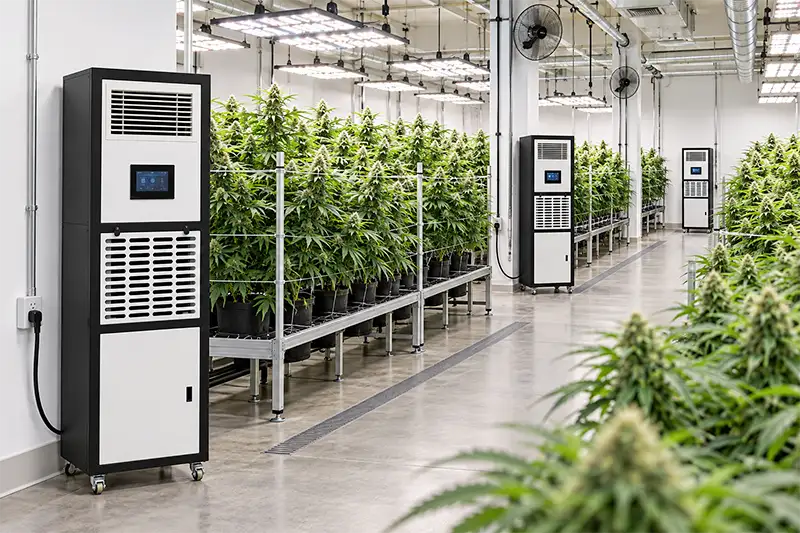
Commercial Grow Room Dehumidification Project
A commercial indoor grow facility required stable humidity control to manage heavy moisture loads from plant transpiration and irrigation, especially during flowering and lights-off periods.
Project Requirements
Solutions
The project used 3 commercial grow room dehumidifiers, each rated at 240 L/day with 3,000 m³/h airflow, providing 720 L/day total capacity and 9,000 m³/h airflow.
The units include automatic humidity control, continuous drainage, defrost, and RS485 communication for system integration.
This setup maintains stable grow room humidity, reduces mold risk, and supports consistent cultivation across growth stages.