
Maintaining stable humidity levels is essential for many industrial and commercial environments, including pharmaceutical manufacturing, electronics production, laboratories, storage facilities, and precision manufacturing. Humidifier dehumidifier combo systems and constant humidity machines both regulate moisture levels, but they differ in system structure, control methods, temperature management, and application suitability.
Understanding the differences between these two humidity control solutions helps businesses select the right equipment according to their RH requirements, environmental conditions, operating costs, and process requirements.
What Is a Humidifier Dehumidifier Combo System?
A humidifier dehumidifier combo system is an integrated humidity control unit that combines both humidification and dehumidification functions in one system. Instead of installing separate humidifiers and dehumidifiers, the combo system can automatically add or remove moisture according to real-time humidity conditions.
The main purpose of this system is to maintain a target relative humidity (RH) range by switching between humidification and dehumidification modes.
For example:
- When humidity is too high, the dehumidification function removes excess moisture.
- When humidity is too low, the humidification function adds moisture.
- When humidity reaches the preset value, the system reduces operation or maintains standby mode.
This type of system is commonly used in environments where humidity conditions change frequently due to seasonal variations, production processes, or external climate conditions.
Key Features of Humidifier Dehumidifier Combo Systems
Integrated Humidification and Dehumidification Functions
The main advantage of a combo system is that it combines two opposite humidity control functions in one unit. This allows users to manage both dry and humid conditions without installing multiple devices.
Automatic RH Adjustment
Humidity sensors continuously monitor environmental conditions. The controller compares actual humidity levels with the preset target value and automatically activates humidification or dehumidification functions.
Flexible Operation Under Changing Conditions
Unlike single-function humidity equipment, combo systems can respond to different environmental changes throughout the year.
For example:
- Winter conditions may require humidification.
- Summer conditions may require dehumidification.
- Production processes may create additional moisture loads.
Suitable for Variable Humidity Environments
Humidifier dehumidifier combo systems are often selected for applications where humidity requirements are important but do not require extremely narrow environmental control.
Typical Applications of Humidifier Dehumidifier Combo Systems
Pharmaceutical Manufacturing
Many pharmaceutical processes require controlled humidity conditions to protect materials, improve production stability, and prevent moisture-related issues.
Electronics Production
Electronic components are sensitive to static electricity and moisture. Stable humidity control helps improve manufacturing reliability.
Laboratories
Laboratories may require controlled humidity conditions for testing accuracy and equipment protection.
Storage Facilities
Storage environments for products, materials, and sensitive goods often need humidity regulation to prevent moisture damage.
Precision Manufacturing
Manufacturing processes involving sensitive materials may require consistent humidity levels to maintain product quality.
What Is a Constant Humidity Machine?
Specification note: Product names can overlap. Wetwells specifies ±3% RH control for its combo range; verify the quoted model’s humidity tolerance and temperature-control functions rather than relying on its name alone.
A constant humidity machine is a humidity control system designed to maintain stable humidity conditions within a controlled environment. Compared with a standard humidifier dehumidifier combo, a constant humidity machine usually focuses on maintaining precise environmental stability.
Many constant humidity machines integrate multiple functions, including:
- Humidification
- Dehumidification
- Cooling
- Heating
- Air circulation
- Temperature and humidity control
These systems are commonly used in applications where humidity fluctuations must be minimized.
Key Features of Constant Humidity Machines
Continuous Humidity Regulation
Constant humidity machines continuously monitor environmental conditions and adjust operation to maintain stable humidity levels.
Precise RH Control
These systems are designed for applications requiring tighter humidity tolerances.
Depending on system design, some constant humidity systems can maintain humidity accuracy within approximately:
- ±1% RH to ±5% RH
The actual accuracy depends on equipment configuration, room conditions, sensor quality, and control strategy.
Stable Environmental Conditions
Unlike basic humidity adjustment systems, constant humidity machines are designed to provide long-term environmental stability.
Integrated Temperature and Humidity Management
Many constant humidity machines also regulate temperature, making them suitable for environments where both temperature and humidity affect product quality.
Typical Applications of Constant Humidity Machines
Testing Laboratories
Environmental testing requires stable temperature and humidity conditions to ensure accurate test results.
Environmental Chambers
Constant humidity systems are commonly used in controlled testing environments.
Pharmaceutical Cleanrooms
Pharmaceutical production requires strict environmental control to maintain product quality and comply with process requirements.
Research Facilities
Scientific research environments often require stable humidity conditions for experiments and equipment operation.
Precision Manufacturing
Industries such as semiconductor, optical manufacturing, and advanced electronics often require precise environmental control.
How Do Humidifier Dehumidifier Combo Systems Work?
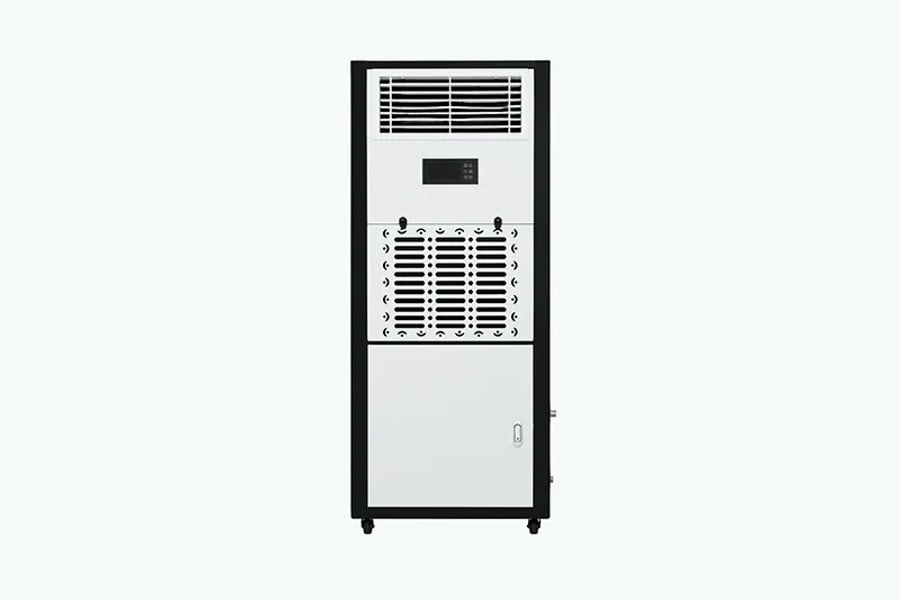
A humidifier dehumidifier combo system operates through automatic humidity detection and adjustment.
Working Principle
Step 1: Humidity Monitoring
A humidity sensor continuously measures the RH level inside the controlled space.
Step 2: Data Comparison
The controller compares the measured humidity with the preset target value.
For example:
- Target humidity: 50% RH
- Actual humidity: 65% RH
The controller activates the dehumidification function.
Step 3: Moisture Adjustment
Depending on the humidity condition:
- High humidity → dehumidification starts.
- Low humidity → humidification starts.
- Stable humidity → system reduces operation.
Main Components
Dehumidification Module
The dehumidification section removes excess moisture from the air. Depending on the system design, it may use refrigerant-based dehumidification technology.
Humidification Module
The humidification section adds moisture through methods such as:
- Steam humidification
- Ultrasonic humidification
- Evaporative humidification
Humidity Sensor
The sensor provides real-time humidity data for automatic control.
Control Module
The control module coordinates the moisture-adding and moisture-removal sections in response to the room sensor.
Fan System
The fan circulates air through the unit and distributes conditioned air throughout the space.
How Do Constant Humidity Machines Work?
Constant humidity machines use a more comprehensive environmental control approach.
Working Principle
Step 1: Real-Time Environmental Monitoring
Temperature and humidity sensors continuously monitor indoor conditions.
Step 2: Intelligent Control Adjustment
The controller analyzes current conditions and adjusts multiple functions.
For example:
- High humidity → activate dehumidification.
- Low humidity → activate humidification.
- Low temperature → activate heating.
- High temperature → activate cooling.
Step 3: Maintain Stable Conditions
The system continuously adjusts operation to keep the environment within the required humidity and temperature range.
Main Components
Humidification System
Adds moisture when humidity falls below the target level.
Dehumidification System
Removes moisture when humidity exceeds the required range.
Cooling and Heating Module
Maintains temperature stability when required.
Environmental Feedback Sensors
The controller receives measurements of room temperature and RH from these sensing elements.
PLC or Intelligent Controller
Controls all operating functions and maintains stable environmental conditions.
Humidifier Dehumidifier Combo vs. Constant Humidity Machine: Key Differences
| Factor | Humidifier Dehumidifier Combo | Constant Humidity Machine |
| Main Function | Adjusts humidity by adding or removing moisture | Maintains constant humidity and often temperature |
| System Structure | Integrated humidity adjustment system | Comprehensive environmental control system |
| Temperature Control | Usually optional or limited | Commonly integrated |
| Humidity Accuracy | Suitable for general RH control | Designed for higher precision |
| Control Complexity | Medium | Higher |
| Initial Investment | Lower | Higher |
| Application Focus | Humidity regulation | Precise environmental stability |
Humidity Control Performance Comparison
Humidifier Dehumidifier Combo Performance
A humidifier dehumidifier combo system is designed for flexible humidity adjustment.
Its advantages include:
- Automatic switching between humidification and dehumidification
- Adaptability to changing humidity conditions
- Simpler operation
- Lower equipment investment
It is suitable when the main goal is maintaining a comfortable or controlled RH range.
Typical humidity control requirements:
- General industrial areas: 40%–60% RH
- Storage environments: 45%–65% RH
- Commercial spaces: 40%–60% RH
Constant Humidity Machine Performance
A constant humidity machine focuses on maintaining highly stable environmental conditions.
Its advantages include:
- Higher humidity control accuracy
- Reduced RH fluctuations
- Integrated temperature management
- Better suitability for sensitive processes
Typical applications may require:
- 35%–55% RH
- 40%–50% RH
- Tight humidity tolerance ranges
Energy Consumption and Operating Cost Comparison
Draft fact-check note: The annual cost ranges below are unverified figures retained from the supplied draft. No location, energy tariff, capacity, moisture load, operating hours, or calculation is provided. Confirm these inputs and costs before publication.
Energy consumption depends on equipment capacity, operating hours, humidity load, and required control accuracy.
Humidifier Dehumidifier Combo Energy Considerations
Combo systems usually have lower initial investment because one unit performs both functions.
Typical factors affecting energy consumption:
- Frequency of humidification operation
- Frequency of dehumidification operation
- Required humidity range
- Equipment capacity
For many commercial and industrial applications, annual operating costs may range approximately:
- $1,000–$20,000/year
depending on operating hours and system size.
Constant Humidity Machine Energy Considerations
Constant humidity machines often consume more energy because they may include:
- Heating
- Cooling
- Humidification
- Dehumidification
- Advanced control systems
Typical annual operating costs may range approximately:
- $5,000–$50,000+/year
depending on:
- Capacity
- Temperature control requirements
- Operating schedule
- Environmental conditions
Although the investment and operating costs may be higher, constant humidity machines provide better environmental stability for critical applications.
Installation and Maintenance Differences
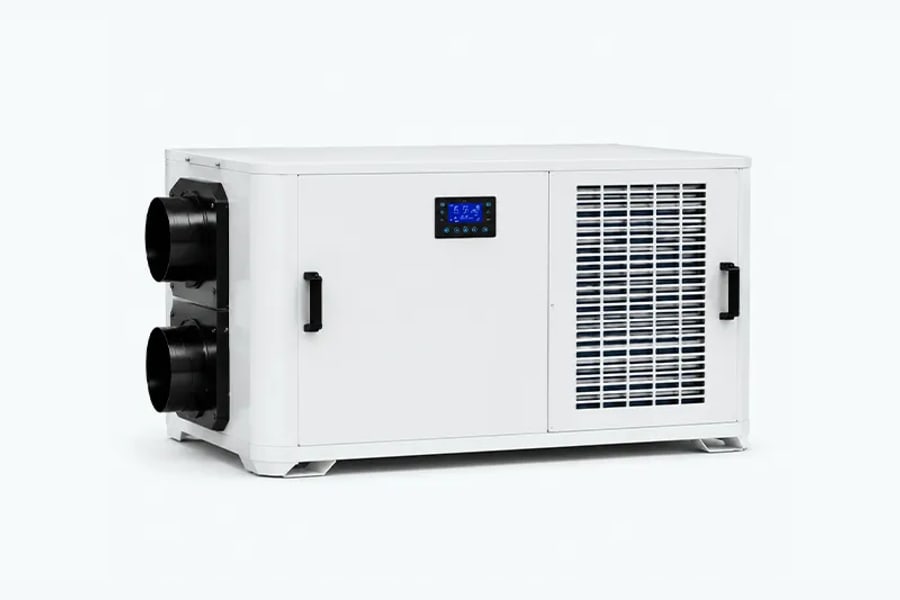
Humidifier Dehumidifier Combo Systems
Installation Characteristics
Advantages:
- Easier installation
- Less complex infrastructure
- Suitable for flexible projects
Installation considerations:
- Correct unit sizing
- Proper airflow design
- Suitable drainage arrangement
- Correct sensor placement
Maintenance Requirements
Regular maintenance includes:
- Cleaning humidification components
- Checking dehumidification performance
- Inspecting drainage systems
- Calibrating humidity sensors
- Cleaning air filters
Constant Humidity Machines
Installation Characteristics
Constant humidity machines usually require more detailed planning.
Considerations include:
- Room conditions
- Air distribution design
- Temperature control requirements
- Electrical requirements
- Professional commissioning
Maintenance Requirements
Maintenance includes:
- Checking cooling and heating systems
- Examining the water-delivery and moisture-generating parts
- Checking temperature and RH readings against calibrated reference instruments
- Checking airflow performance
- Inspecting control systems
Which One Should You Choose?
The choice between a humidifier dehumidifier combo system and a constant humidity machine depends on the required environmental control level.
Choose a Humidifier Dehumidifier Combo When:
A combo system is suitable when:
- Only humidity adjustment is required.
- Temperature conditions are relatively stable.
- Flexible RH control is needed.
- Lower investment is preferred.
- The application does not require extremely precise environmental stability.
Suitable Applications:
- Warehouses
- Storage rooms
- Production areas
- Commercial buildings
- General industrial environments
Choose a Constant Humidity Machine When:
A constant humidity machine is better when:
- Both temperature and humidity require precise control.
- Environmental stability directly affects product quality.
- Tight RH tolerances are required.
- Continuous monitoring and adjustment are necessary.
Suitable Applications:
- Laboratories
- Testing facilities
- Pharmaceutical cleanrooms
- Research centers
- Precision manufacturing environments
This comparison shows that humidifier dehumidifier combo systems focus on flexible humidity adjustment, while constant humidity machines focus on precise environmental control. The best solution depends on the required RH accuracy, temperature control needs, application conditions, and long-term operating requirements.