
Keeping indoor relative humidity (RH) between 30% and 50% helps reduce mold risk, but no humidity number guarantees prevention on wet surfaces. Leaks, condensation, and hidden dampness can still support growth.
Effective prevention combines consistent humidity control with prompt drying, adequate ventilation, and timely repairs that stop water entering buildings.
What Is the Best Indoor Humidity Level to Prevent Mold?
EPA and CDC Recommendations
The Environmental Protection Agency (EPA) advises keeping indoor relative humidity below 60%, ideally between 30% and 50%. This range is a practical moisture-control target rather than a promise of mold-free rooms.
The Centers for Disease Control and Prevention (CDC) recommends keeping household humidity no higher than 50% throughout the day. Its guidance emphasizes fixing leaks, moving air, and drying wet materials alongside humidity control.
For most homes, aiming for 30–50% RH is a sensible starting point. The appropriate setting also depends on local climate, indoor temperature, building conditions, and whether condensation appears.
How Different Humidity Levels Affect Mold Risk
Humidity readings indicate how much water vapor the air contains relative to its capacity at the measured temperature. They do not directly describe moisture trapped inside walls or carpets.
| Indoor RH | What It Means for Moisture Control | Practical Response |
| Below 30% | Usually unnecessary for mold prevention and potentially uncomfortable | Avoid excessive drying; investigate any wet surfaces separately |
| 30–50% | Preferred general household range | Maintain the range and inspect vulnerable areas |
| Above 50% to below 60% | Above the CDC target; sustained dampness deserves attention | Improve moisture control and check for condensation |
| 60–70% | Above the EPA’s recommended upper limit | Investigate humidity sources and take corrective action |
| Above 70% | Persistent exposure raises concern about damp materials | Act promptly and inspect hidden moisture-prone spaces |
These bands are management guidelines, not biological boundaries. Mold can develop on a repeatedly wet surface at any displayed room humidity, while brief elevated readings do not prove mold is growing.
Is 40–50% a Better Everyday Setting?
A 40–50% RH control band can provide a useful operating margin below the CDC ceiling without pushing the home toward unnecessarily dry conditions. It is not a separate government standard.
Select a setting your equipment can maintain under normal conditions, then check actual readings across rooms. If cold surfaces remain damp, address those surfaces rather than merely lowering the thermostat’s humidity target.
Why Does High Humidity Encourage Mold Growth?
Moisture Allows Spores to Grow
Mold spores are common in indoor and outdoor air. When they land on sufficiently damp materials, they may grow, especially where dust, wood, paper, or other suitable substances are present.
Sustained humidity can keep certain surfaces damp for long periods. Repeated moisture exposure is therefore more informative than a single reading taken after a shower or during unusually humid weather.
Controlling indoor vapor levels reduces one source of moisture, but it does not eliminate airborne spores. Prevention focuses on limiting the damp conditions that support their growth.
Room Humidity Is Not Surface Moisture
A hygrometer typically measures conditions in the surrounding room air. A cold exterior wall, window frame, or uninsulated pipe can have very different moisture conditions directly at its surface.
When warm air meets a sufficiently cold surface, its moisture can condense into liquid water. That wet surface may support mold despite a comfortable humidity reading elsewhere in the room.
Leaks create a similar mismatch. Water behind drywall or under flooring may remain trapped while the open room stays at 45% RH, making a normal gauge reading falsely reassuring.
Why Duration and Building Materials Matter
Paper-faced drywall, wood, fabrics, and carpet can retain moisture after a spill or leak. If drying is delayed, the affected material may provide favorable conditions for growth.
A brief humidity spike from cooking is different from weeks of damp basement air. However, repeated spikes can still matter when they continually wet the same poorly ventilated surface.
Which Areas of Your Home Are Most Vulnerable to Mold?
Basements and Crawl Spaces
Below-grade spaces face moisture from soil, foundation openings, drainage defects, and humid air. Cooler surfaces and limited circulation can make stored cardboard, wooden shelving, and finished walls vulnerable.
Check for water marks near the foundation, damp floor edges, and musty storage areas. A dehumidifier may control airborne moisture, but groundwater entry or foundation leakage requires separate repairs.
Bathrooms and Kitchens
Showers, baths, boiling water, and dishwashing produce substantial short-term moisture. Poorly exhausted rooms can leave ceilings, grout, cabinets, and window surfaces wet long after the activity ends.
Use exhaust ventilation that discharges outdoors and continue removing humid air after moisture-producing activities. Regularly inspect sink cabinets, supply connections, and seals for leaks that ventilation cannot fix.
Bedrooms, Closets, and Living Areas
Furniture placed tightly against cold exterior walls can restrict airflow and conceal condensation. Closets packed with clothing may also dry slowly after humid weather or a minor leak.
Allow circulation around vulnerable walls and inspect hidden corners periodically. A room that reads 45% RH near the doorway may still contain a damp patch behind a wardrobe.
Attics and Laundry Rooms
Roof leaks, bathroom exhaust discharged into an attic, and inadequate insulation can wet wood or other building materials. Laundry areas also need attention around hoses, drains, and dryer vent connections.
Make sure dryers exhaust outdoors, not into enclosed spaces. Water stains on attic framing or ceiling finishes warrant investigation even when the main living areas show normal humidity readings.
How Can You Measure and Monitor Indoor Humidity?
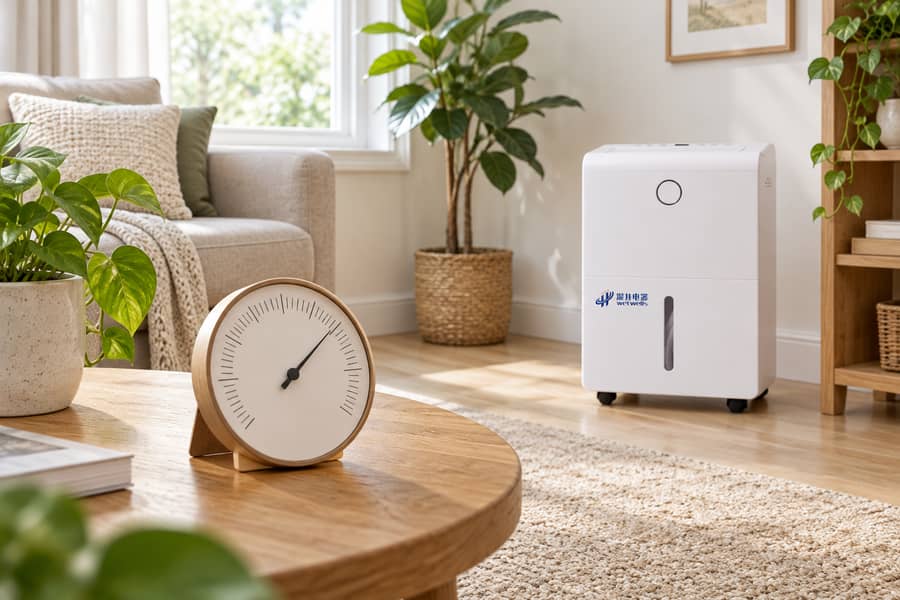
Measure with a Digital Hygrometer
A digital hygrometer provides a practical snapshot of relative humidity and often temperature. Place it away from direct sunlight, heating outlets, bathroom steam, and the dehumidifier’s immediate discharge airflow.
Consider readings from more than one location when rooms behave differently. Basement, bedroom, and hallway measurements can reveal localized problems that a single central thermostat sensor may miss.
Consumer sensors can vary, so treat small differences cautiously. More important clues include repeated high readings, persistent condensation, and whether the humidity trend improves after corrective changes.
Track Patterns Instead of Isolated Numbers
Check humidity at consistent times and after showers, cooking, laundry, or rainy periods. A simple log can show whether spikes dissipate or remain elevated for many hours.
Note the room temperature alongside RH because relative humidity changes with temperature. A cooling room can reach a higher RH without receiving additional water vapor from a new source.
A persistent reading above the intended range should prompt inspection of ventilation, drainage, equipment operation, and moisture sources. The reading identifies a problem to investigate, not its exact location.
Look for Physical Warning Signs
Condensation on windows, wet pipe surfaces, peeling finishes, water stains, and recurring musty odors deserve attention. Mold may also develop where it is not immediately visible.
Do not wait for a sensor to exceed 60% before checking an obvious leak. Visible water and damp materials call for action regardless of what the room display reports.
How to Reduce Indoor Humidity and Prevent Mold Growth
Stop Water Intrusion First
Repair plumbing leaks, roof defects, leaking window joints, and faulty exterior drainage promptly. Reducing room RH cannot compensate for a pipe that continues soaking the inside of a wall.
Direct roof runoff away from foundations and inspect gutters and downspouts. In moisture-prone basements, assess seepage routes before relying on mechanical drying as a long-term solution.
After clean-water spills or leaks, begin drying affected materials immediately. The EPA advises drying wet areas and belongings within 24–48 hours where possible to limit opportunities for mold growth.
Ventilate Moisture-Producing Rooms
Run bathroom and kitchen exhaust fans during moisture-producing activities, ensuring the air is discharged outside. Effective exhaust removes vapor before it spreads into adjoining rooms or reaches colder surfaces.
Opening windows may help when outdoor air is suitable, but humid outdoor conditions can increase the indoor moisture load. Consider outdoor temperature and moisture conditions rather than assuming ventilation always dries a room.
Avoid venting clothes dryers into garages, attics, or interior spaces. Check that dryer exhaust routes remain clear and that household activities are not continuously adding unnecessary moisture.
Reduce Condensation and Stagnant Air
Insulating cold pipes and addressing poorly insulated wall sections can reduce condensation. Improving airflow behind furniture and inside storage areas helps those surfaces dry more consistently.
Check recurring window condensation for possible temperature, ventilation, or moisture-load problems. Repeatedly wiping away droplets helps temporarily, but identifying why the glass becomes wet is more effective.
Use Air Conditioning or Dehumidification When Needed
Air conditioners often remove some moisture while cooling, although their effectiveness depends on operation and system design. A home can remain humid when cooling demand is low but moisture enters continuously.
A dedicated dehumidifier removes water vapor without requiring the same cooling demand. It is particularly useful in humid basements, rainy seasons, and rooms where ventilation alone does not maintain the target.
Use humidity readings and evidence of dampness to assess results. If the machine runs constantly yet surfaces remain wet, investigate drainage, air circulation, unit suitability, and hidden water entry.
Can a Dehumidifier Help Maintain Humidity Below 50%?
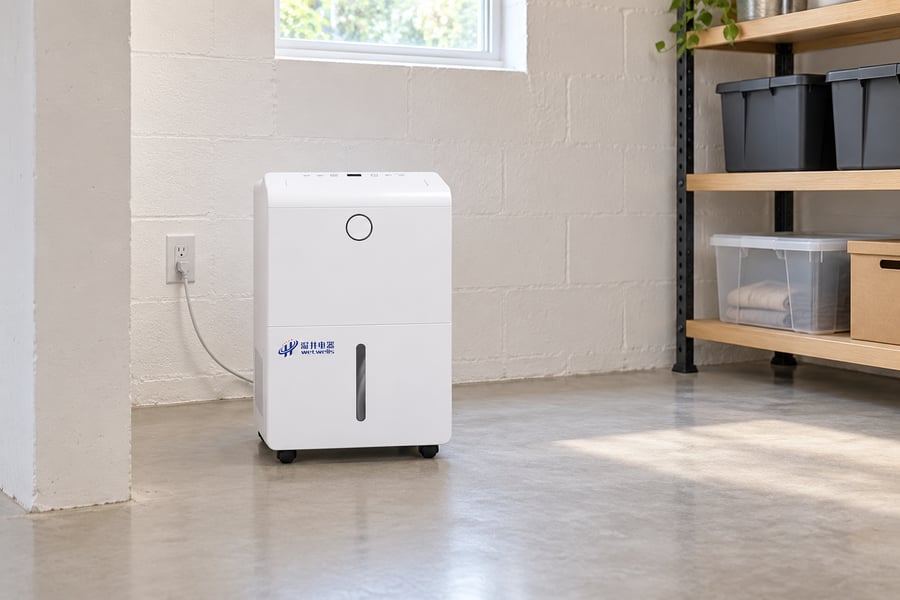
What Dehumidifiers Can and Cannot Do
A dehumidifier draws in moist air, removes part of its water vapor, and returns drier air to the space. Properly selected equipment can support more consistent household humidity control.
It cannot seal a roof leak, repair a pipe, or reliably dry water trapped behind finished walls. Nor does reducing RH remove existing mold from contaminated materials.
A suitable setpoint helps manage airborne humidity, but actual results depend on moisture load, room temperature, airflow, and how the unit operates in the installed location.
Portable vs. Whole-House or Ducted Dehumidifiers
Portable models serve individual rooms or concentrated problem areas. Whole-house systems, often using ducts, distribute conditioned air across several rooms or zones and require more involved installation planning.
| Configuration | Typical Use | Main Selection Considerations |
| Portable room dehumidifier | One bedroom, basement, laundry area, or other localized space | Placement, air circulation, noise, drainage, and measured moisture load |
| Whole-house / ducted dehumidifier | Multiple rooms or coordinated home-wide moisture control | Duct design, airflow distribution, controls, installation access, and drainage routing |
WetWells offers household dehumidifier configurations for residential moisture management, including portable options and whole-house or ducted arrangements. Features and installation requirements should be confirmed for the particular model and application.
Choosing Drainage and Humidity Controls
Portable equipment may collect water in a removable tank or discharge through a connected hose where supported. Continuous drainage reduces manual emptying when a suitable drain is available.
A condensate pump may be available as an option when water must travel upward to a drain. Do not assume a pump is supplied with every model or that every installation supports it.
Before selection, compare the intended rooms, indoor temperature, expected moisture load, desired RH, operating noise, electrical supply, and drainage route. Confirm model-specific capabilities with WetWells instead of relying on category descriptions.
What Should You Do If Mold Is Already Growing?
Find and Correct the Source of Dampness
Visible mold, persistent musty odors, and a history of water intrusion justify a closer inspection. Look beyond the stained surface for leaks, condensation, wet insulation, or concealed damage.
Lowering humidity can reduce future moisture accumulation, but it does not remove mold already present. Cleaning or appropriate material replacement must accompany correction of the source that allowed growth.
Mold in a wall cavity or around an HVAC system may require professional assessment. Avoid disturbing suspected hidden contamination without considering how spores and debris could spread.
Clean Affected Materials Appropriately
The EPA advises that many small, accessible areas of mold on hard surfaces can be cleaned with detergent and water, followed by complete drying. Protect yourself from exposure during cleanup.
Absorbent items such as soaked carpet, ceiling tile, or damaged drywall may be difficult to clean thoroughly and sometimes need replacement. Painting over mold or merely drying it is insufficient.
For extensive growth, significant water damage, contaminated water, or suspected HVAC contamination, consult qualified professionals. Anyone with health concerns should seek appropriate medical advice before attempting cleanup.
The CDC notes that damp and moldy environments can irritate some people and trigger allergic or respiratory symptoms. Moisture control helps address environmental exposure; it is not a medical treatment.
How Can Homeowners and Building Managers Maintain Healthy Humidity Levels?
Establish a Simple Household Monitoring Routine
Set a realistic humidity target within the recommended range and review readings during changing seasons. Compare those measurements with actual conditions in basements, bathrooms, closets, and exterior-wall corners.
If a room repeatedly exceeds 50% RH, investigate before the condition becomes persistent. If it approaches or passes 60%, treat that as a clear prompt for corrective moisture control, not a biological cutoff.
Coordinate Repairs in Shared or Managed Buildings
Building managers should track reported leaks, recurring condensation, and areas with repeated dampness. A complaint history can reveal unresolved envelope, plumbing, drainage, or ventilation problems across multiple units.
Record when an issue was reported, what source was identified, and whether affected materials dried. Confirm that repairs solved the cause rather than relying on a temporary improvement in room RH.
Practical Moisture-Control Maintenance Checklist
- Daily or after moisture-producing activities: Use appropriate exhaust ventilation and check that wet countertops, floors, and shower areas dry.
- Weekly: Review hygrometer readings in vulnerable rooms and investigate condensation or unusual musty odors.
- Monthly: Inspect accessible plumbing connections, window edges, basement corners, and stored items for moisture.
- Seasonally: Check gutters, downspouts, roof and window seals, insulation concerns, and changes in indoor humidity patterns.
- As equipment instructions require: Clean filters, empty tanks, check hose slopes and drain outlets, and inspect any installed pump for proper operation.
- Immediately after leaks or flooding: Stop the water source, document damage, remove standing water, and arrange prompt drying or professional restoration where appropriate.