
High humidity can worsen allergies and respiratory health by encouraging mold growth and helping dust mites thrive indoors. These exposures may irritate airways or trigger symptoms in susceptible people.
However, humid air does not affect everyone equally. Prevention starts with finding damp areas, correcting water problems, and managing indoor moisture.
How High Humidity Changes the Indoor Environment
Moisture in Air Is Different From Water on Surfaces
Relative humidity compares the water vapor present with saturation at the same temperature. It does not measure moisture inside walls or flooring.
Warm indoor air can carry considerable water vapor. When that air reaches a sufficiently cold window, pipe, or exterior wall, condensation may form even without a plumbing leak.
Rooms also experience temporary humidity increases from cooking, showering, drying clothes, and ordinary household activity. Persistent moisture deserves greater attention than an isolated reading immediately after a shower.
Why Dampness Matters More Than a Single Humidity Number
Mold requires moisture and a suitable material on which to grow. Dust mites benefit from humid conditions, particularly where fabrics and accumulated dust provide sheltered habitats.
The practical concern is ongoing exposure to environments that support these triggers, not merely whether the air feels sticky during one particularly warm afternoon.
For general household moisture management, the EPA recommends an indoor relative humidity range of approximately 30–50%. Households concerned about dust mites can aim below 50% when practical.
Neither number guarantees that mold cannot develop on a wet surface. A hidden leak can keep building materials damp while a hygrometer elsewhere displays an ordinary reading.
How Excess Moisture Can Increase Indoor Allergy Triggers
Mold on Damp Building Materials
Mold spores are routinely present indoors and outdoors. When spores settle on persistently moist materials, growth can develop on drywall, wood, insulation, wallpaper, or other suitable surfaces.
Bathrooms with recurring condensation and basements with water intrusion are familiar trouble spots. Growth may also develop behind cabinets or under flooring where household cleaning cannot reach.
Mold exposure may leave a sensitized person with an irritated nose or eyes; coughing and wheezing are also possible responses. Some people experience no noticeable symptoms despite being in a damp environment.
The CDC’s guidance on mold emphasizes that possible health effects vary. It also stresses cleaning existing growth and correcting the moisture source rather than focusing on identifying the mold species.
Visible staining is not always mold, and color alone cannot establish health risk. A musty smell or recurring damp patch should nevertheless prompt a search for unwanted moisture.
Dust Mites in Bedding and Upholstery
Dust mites are microscopic organisms that feed partly on shed skin. They commonly inhabit mattresses, pillows, upholstered furniture, and carpeting where their food and shelter are readily available.
Warm, humid surroundings favor mite survival and reproduction. The moisture held in fabric and settled dust also creates conditions different from those measured in the center of a room.
For sensitized individuals, proteins associated with mite waste and body fragments can trigger allergic rhinitis or asthma symptoms. The mites themselves are not evidence that a home is dirty.
The Asthma and Allergy Foundation of America explains that reducing humidity can discourage mites, but remaining allergen particles may continue causing symptoms after populations decline.
Other Exposures Associated With Damp Buildings
Damp buildings may contain several biological materials and irritating substances at once. Water damage can affect dust, furnishings, insulation, and ventilation components, complicating attempts to identify one responsible agent.
| Exposure or Condition | How Moisture Contributes | Possible Effect in Susceptible People | Practical Response |
| Mold growth | Water supports growth on suitable surfaces | Allergic symptoms, irritation, asthma aggravation | Remove growth safely and fix moisture source |
| Dust mites | Humid fabrics and dust support populations | Nasal allergy or asthma symptoms | Reduce humidity and clean bedding |
| Damp building materials | Can harbor mixed microbial exposures | Respiratory irritation or symptoms associated with damp spaces | Inspect, dry, repair, or replace damaged materials |
| Hot, humid air | Increases heat discomfort and may be an asthma trigger for some | Breathing discomfort, variable airway symptoms | Improve cooling and assess individual triggers |
What Respiratory Symptoms May Be Worse in Humid Homes?
Nasal, Eye, and Throat Symptoms
Allergic rhinitis may involve repeated sneezing, congestion, a runny nose, or an itchy nose. Sensitive individuals can also experience watery eyes or irritation around the throat.
Those symptoms overlap with viral infections, outdoor pollen exposure, pet allergens, and nonallergic irritation. Their appearance during humid weather does not establish that indoor moisture caused them.
Keep a brief record linking each episode to a room, activity, and time. A pattern associated with a particular bedroom or basement may provide useful context to discuss with a healthcare professional.
Asthma and More Sensitive Airways
For someone with asthma, indoor allergens or irritants may contribute to coughing, wheezing, chest tightness, or shortness of breath. An exposure tolerated by one resident may bother another.
The CDC reporting links time spent in damp buildings with respiratory complaints, including asthma symptoms. These findings support addressing dampness without assuming every exposed person will become ill.
Hot, humid air is a separate issue from mold or mites. Heat stress, a sensation of heavy air, or weather-related asthma symptoms can occur without a damp-building exposure.
Cooling a room may improve thermal comfort, while removing moisture can change conditions favorable to biological triggers. Neither action substitutes for prescribed asthma care or professional assessment.
Who Might Need Greater Precautions?
People with established mold or dust mite allergies and those with asthma may be especially affected by relevant exposures. Include children’s rooms and spaces occupied by residents with long-standing lung disease in the moisture inspection.
Some immunocompromised individuals face additional risks from certain fungi. They should seek individualized clinical advice and avoid participating in mold cleanup where exposure could be significant.
What the Evidence Can and Cannot Establish
Research connects damp indoor conditions with several respiratory outcomes, including coughing, wheezing, allergic symptoms, and worsening asthma. These observations provide reasons to prevent persistent indoor dampness.
However, dampness is a broad condition rather than a single measurable allergen. Studies may involve different building materials, climates, occupants, exposure levels, and mixtures of pollutants.
A statistical association cannot identify why one person coughs in one house. Nor can an isolated humidity measurement determine whether mold, mites, pollen, or another trigger explains symptoms.
The presence of visible mold establishes a cleanup issue, not a specific medical diagnosis. Routine species testing is generally less useful than locating moisture and correcting the affected area.
Likewise, reducing relative humidity does not prove that symptoms will improve. Responses may depend on sensitization, other exposures, medical treatment, and whether existing allergen reservoirs are addressed.
How to Inspect Rooms for Hidden Moisture Problems
Begin With Visible and Repeated Warning Signs
Walk through the home after normal daily activities and again when surfaces have had time to dry. Compare repeated observations rather than treating one damp morning as definitive.
Look for condensation, bubbling paint, peeling wallpaper, discolored ceilings, softened trim, and staining near plumbing. Persistent musty odors also justify inspection, especially in enclosed rooms.
Use the following room-by-room checklist to connect common moisture sources with specific inspection points. Checking the source is more valuable than moving an appliance into the room immediately.
| Room or Area | Likely Moisture Sources | Inspection Priorities | First Practical Action |
| Bedroom | Condensation, poorly drying fabrics, exterior-wall dampness | Window corners, behind furniture, mattress surroundings | Check airflow and repeated dampness |
| Bathroom | Shower steam, plumbing leaks, weak exhaust | Ceiling, grout, vanity cabinet, exhaust outlet | Use effective exhaust and repair leaks |
| Basement | Groundwater entry, seepage, cold surfaces | Foundation joints, floors, stored cardboard | Investigate water entry before equipment selection |
| Kitchen | Cooking vapor, sink or dishwasher leaks | Sink cabinet, appliance connections, nearby walls | Vent cooking and repair plumbing |
| Laundry area | Dryer exhaust leaks, wet clothes, hose failures | Dryer duct, hoses, floor and wall edges | Correct venting and stop water leaks |
Use a Hygrometer Without Overinterpreting It
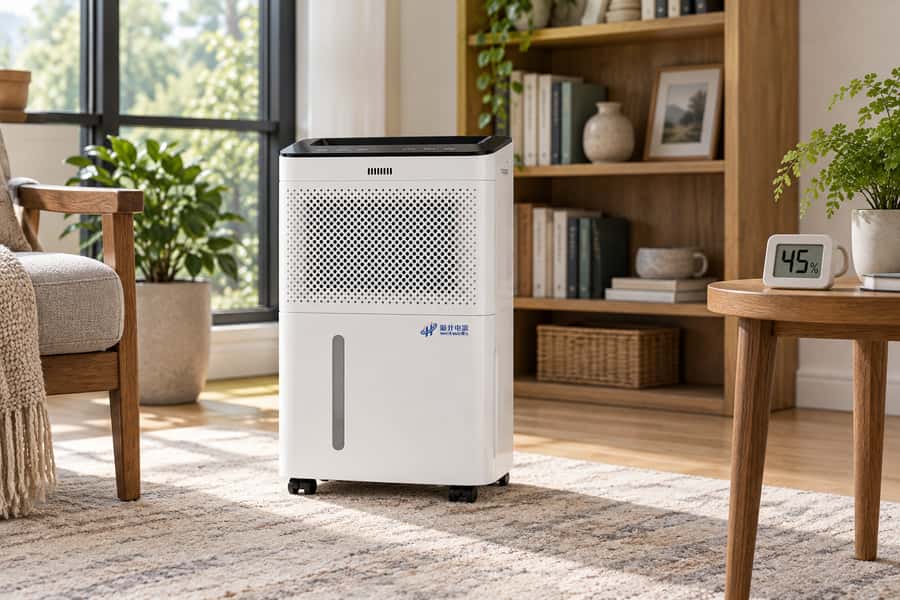
Place a hygrometer away from direct sunlight, heating outlets, and the immediate stream of a humidifier or dehumidifier. Allow readings to stabilize before comparing different rooms.
Record observations at similar times on several days, including after moisture-producing activities. Note the room, temperature, relative humidity, odors, condensation, and any newly discovered leaks.
A reading within the recommended range cannot rule out a wet wall cavity. Surface condensation can still occur where poorly insulated materials are sufficiently cold, regardless of average room conditions.
Check Places That Ordinary Cleaning Misses
Move accessible furniture slightly away from exterior walls to inspect the space behind it. During this check, include sink cupboards, laundry connections, and window recesses, where small leaks may remain unnoticed.
Do not open suspect walls or disturb extensive growth without appropriate expertise. Water-damaged materials, electrical hazards, and possible contamination can make invasive inspection unsafe.
For an explicitly hypothetical example, a basement might measure 45% RH while a pipe slowly leaks behind shelving. Repairing that leak matters more than lowering the room setting further.
Practical Steps to Control Moisture and Reduce Allergen Reservoirs
Stop Water Entry Before Treating the Air
Repair leaking plumbing, damaged roof areas, and failed window seals. Check outdoor drainage where water collects beside foundations, particularly after heavy rain or irrigation.
Dry wet furnishings and building materials promptly when safe. The EPA advises addressing water damage quickly, generally within 24–48 hours, because prolonged dampness increases the chance of mold growth.
Porous materials that remain soaked or develop significant mold growth may require removal. Painting over staining does not solve persistent moisture or reliably address contamination underneath.
Ventilate Where Moisture Is Generated
Run bathroom exhaust fans during showers and afterward until excessive moisture clears. Trace the exhaust duct to its exit; shower moisture should leave the building instead of being transferred to a roof void.
Use a kitchen exhaust system when producing steam and ensure clothes dryers vent properly. A disconnected dryer duct can release substantial moisture into surrounding rooms.
Assess the air outside before deciding to ventilate through a window. During very humid weather, bringing in outdoor air may increase the indoor moisture load rather than reduce it.
Air conditioning can remove water vapor while cooling, but short operating cycles or unsuitable system settings may leave humidity elevated. Persistent problems deserve a review of ventilation and moisture sources.
Reduce Settled Allergens in Sleeping and Living Areas
A moisture-management plan works better when paired with routine cleaning. Existing mite allergens and other particles can remain in textiles even after the air becomes drier.
- Protect bedding: Use allergen-resistant mattress and pillow encasements when dust mite sensitivity is a concern.
- Wash routinely: Clean sheets and pillowcases weekly, following fabric care instructions and appropriate allergy guidance.
- Limit reservoirs: Reduce unnecessary fabric clutter, and consider washable rugs rather than extensive carpeting in persistently damp rooms.
- Vacuum carefully: Use appropriate filtration and avoid stirring substantial dust around a person with known sensitivity.
- Clean visible growth safely: Address limited mold on suitable hard surfaces while fixing the water source; seek help for extensive contamination.
For air filtration, the EPA explains that portable cleaners and HVAC filters supplement source control and ventilation. They cannot remove every indoor pollutant.
Review Conditions After Repairs
Once the moisture source has been corrected, revisit the area during different weather conditions. Check for renewed condensation, staining, damp smells, or unusually high humidity readings.
If a wet surface returns despite apparent repairs, investigate drainage, insulation, ventilation, or concealed plumbing. Repeated problems suggest that the initial source was not fully addressed.
Can a Household Dehumidifier Help With Humidity-Related Triggers?
Turning Airborne Moisture Into Collected Water
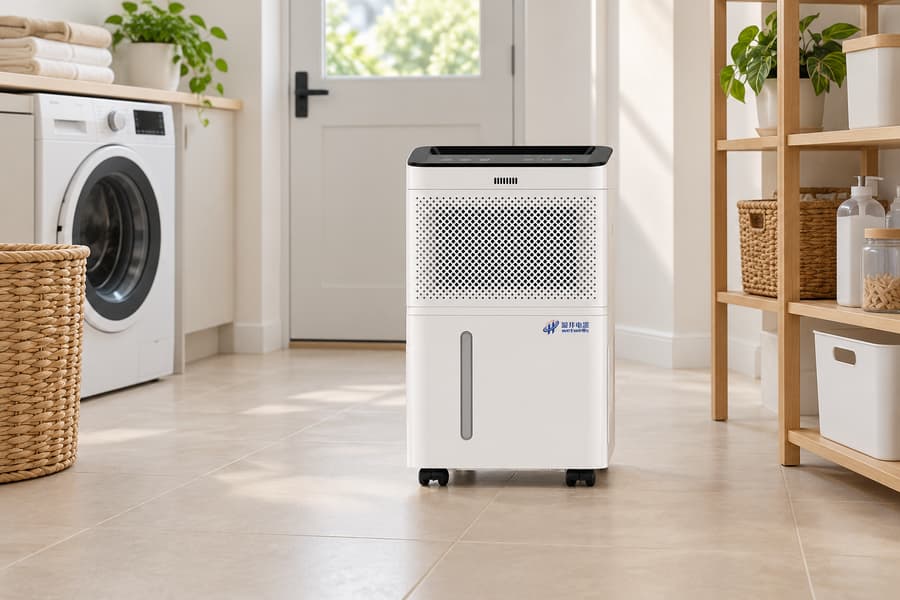
Inside the appliance, water vapor is separated from the circulating air; the collected water must then be emptied or discharged through drainage. Keeping damp air from persisting helps restrict the conditions that sustain mites and moisture-dependent fungal growth.
It does not remove established mold from walls, repair damaged materials, or provide medical treatment. A room can still contain allergen particles even when its humidity reading improves.
Dehumidifiers can be useful in damp basements, bedrooms, and laundry areas when source repairs and ventilation alone do not adequately control airborne moisture.
Select for the Room and Maintain the Unit
Consider the room’s size, temperature, moisture load, available drainage, and acceptable operating noise. Compare capacity ratings under stated test conditions rather than assuming every appliance performs identically.
A collection tank suits locations without a drain, while a hose or pump arrangement may reduce emptying chores where properly installed. Check the unit’s operating temperature requirements.
For example, WetWells household dehumidifier options include portable and whole-house configurations, with tank, hose, and other drainage choices depending on the model and installation.
Keep filters and tanks clean according to manufacturer instructions, inspect hoses for blockage, and verify the actual room humidity periodically. Hygiene and maintenance are part of responsible operation.
When Professional Building or Medical Assessment Is Appropriate
Signs That Warrant a Building Specialist
Seek qualified building or moisture-remediation help when water damage is extensive, mold repeatedly returns, or leaks appear to involve concealed spaces, insulation, or structural components.
Professional assistance is also appropriate after contaminated flooding or when cleanup could disturb substantial mold growth. Residents with significant respiratory vulnerabilities should avoid unnecessary exposure during remediation.
Ask investigators to identify the moisture pathway and propose verifiable repairs. A useful assessment explains why materials are wet, not merely whether an air sample contains spores.
Symptoms That Deserve Medical Attention
Arrange medical assessment for persistent wheezing, recurring breathlessness, prolonged coughing, or allergy symptoms that disrupt normal life. Discuss timing, room-specific patterns, existing diagnoses, and other potential triggers.
A clinician may determine whether an allergy evaluation, asthma review, or another investigation is needed. A humidity log can provide context, but it cannot replace medical testing.
If breathing becomes severely difficult or suddenly deteriorates, obtain emergency medical assistance immediately; do not wait for a change in room conditions. Environmental adjustments should never delay essential medical care.