
Construction Dehumidifier

Our construction dehumidifiers effectively remove moisture for new builds, concrete and screed drying, drywall work, basements, and restoration projects.

With refrigerant-based operation, portable jobsite-friendly design, and configurable capacity, drainage, controls, and branding, we provide tailored solutions that help contractors manage humidity and keep projects moving.

Key Features of Our Construction Dehumidifiers

Heavy-Duty Job-Site Durability

Heavy-Duty Job-Site Durability

Rugged metal housing withstands rough transport, frequent handling, and job-site impacts.

Automatic Condensate Drainage

Automatic Condensate Drainage

Built-in pump and drainage hose enable continuous water removal without manual emptying.

Job-Site Mobility

Job-Site Mobility

Heavy-duty wheels and sturdy handles simplify transport and repositioning on construction sites.

Wide Operating Temperature Range

Wide Operating Temperature Range

Operates from 33°F to 125°F (1–52°C) for reliable dehumidification across varying job-site conditions.

Digital Controls & Auto Defrost

Digital Controls & Auto Defrost

Digital humidity controls simplify operation, while auto defrost reduces frost buildup in cooler conditions.

Easy Maintenance and Servicing

Simplifies routine inspection, cleaning, and servicing in dusty construction environments.

Construction Dehumidifier Technical Specifications

Explore the key specifications of our construction dehumidifiers, including moisture removal capacity, coverage, power requirements, and dimensions. Available configurations can be tailored to different job-site needs.
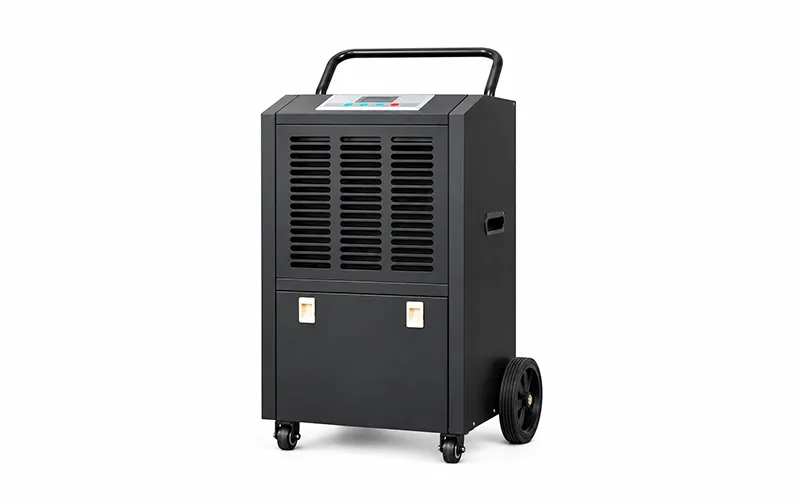
Construction Dehumidifier Technical Specifications

Specification

Details

Dehumidification Capacity

70 / 90 L/day

Application Area

70–120 m²

Power Supply

220 V

Power Consumption

660 W

Refrigerant

R22 / R410A / R290

Housing Material

Metal

Dimensions (L × W × H)

495 × 405 × 1,000 mm

Weight

36 kg

Core Components

Compressor, Condenser, Control Board

Color

Customizable

Custom Construction Dehumidifier Solutions

We tailor construction dehumidifier capacity, controls, mobility, drainage, and branding to project needs and site conditions for an ideal fit.

Capacity and Airflow Customization

Match capacity and airflow to site size, moisture load, drying targets, and conditions.

Voltage and Electrical Configuration

Specify voltage, frequency, and phase to match jobsite power supplies.

Mobility and Installation Options

Choose wheels, handles, and installation options for easy movement and site layouts.

Drainage and Water Removal

Select drainage options for efficient water removal, less manual emptying, and continuous operation where suitable.

Humidity Control and Automation

Choose sensors, setpoints, and automatic controls to maintain target humidity and simplify maintenance.

Housing, Branding and OEM/ODM

Customize colors, labels, logos, and packaging for branding and OEM/ODM projects.

Find the Right Construction Dehumidifier for Your Project

Explore reliable construction dehumidifiers designed to meet your drying capacity, job-site conditions, and operational requirements.

Applications

Our construction dehumidifiers help manage excess moisture during building, renovation, and restoration projects, supporting material drying and indoor humidity control.
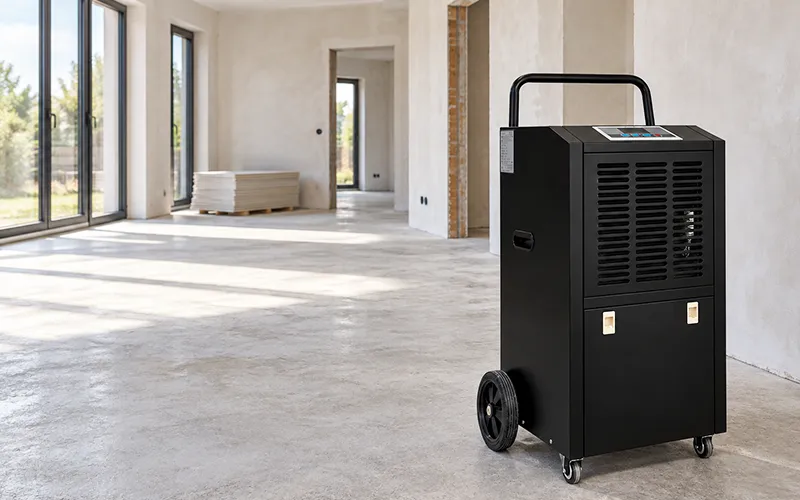
New-Build Construction Dehumidifier

New-build Construction

Manage indoor humidity in newly constructed buildings to support the drying of walls, floors, and interior finishes before project completion.
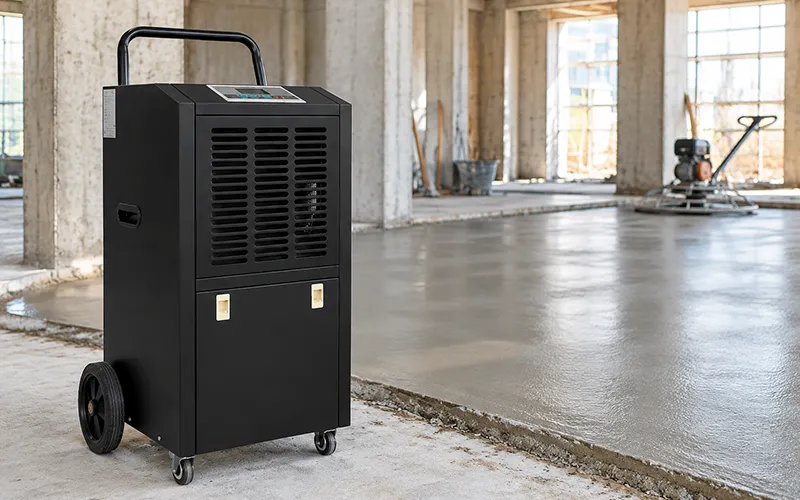
Concrete Drying Dehumidifier

Concrete and Screed Drying

Control ambient humidity during concrete and screed drying to support suitable conditions for flooring installation and finishing work.
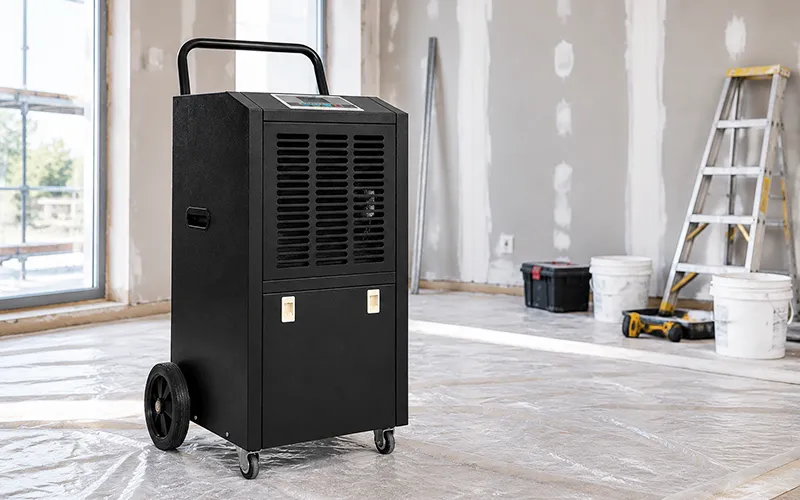
Plaster and Drywall Drying Dehumidifier

Plaster and Drywall Drying

Remove excess airborne moisture during plaster and drywall drying, helping maintain suitable conditions for interior finishing.
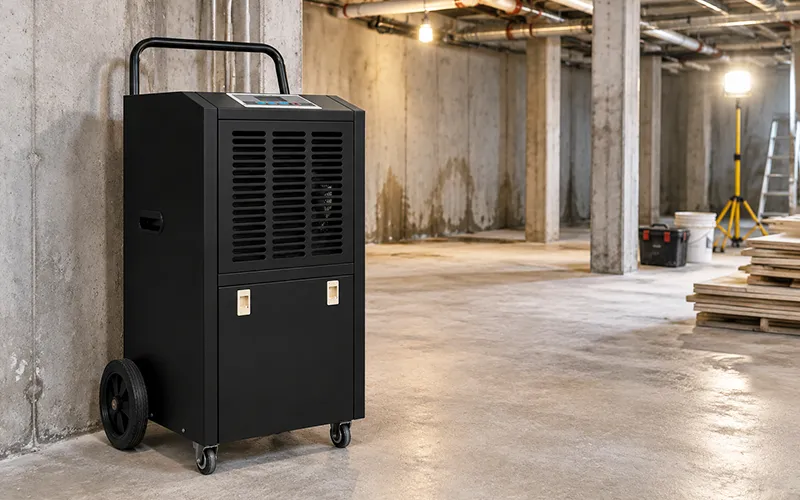
Basement and Foundation Projects Dehumidifier

Basement and Foundation Projects

Control excess airborne moisture in basements, foundations, and underground construction areas to maintain suitable working conditions.
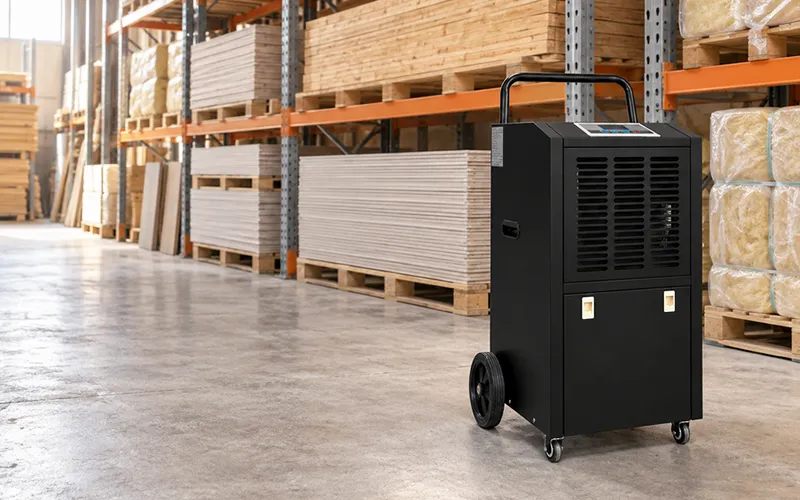
Construction Material Storage Dehumidifier

Construction Material Storage

Manage humidity in storage areas to help protect wood, drywall, insulation, and other moisture-sensitive building materials.
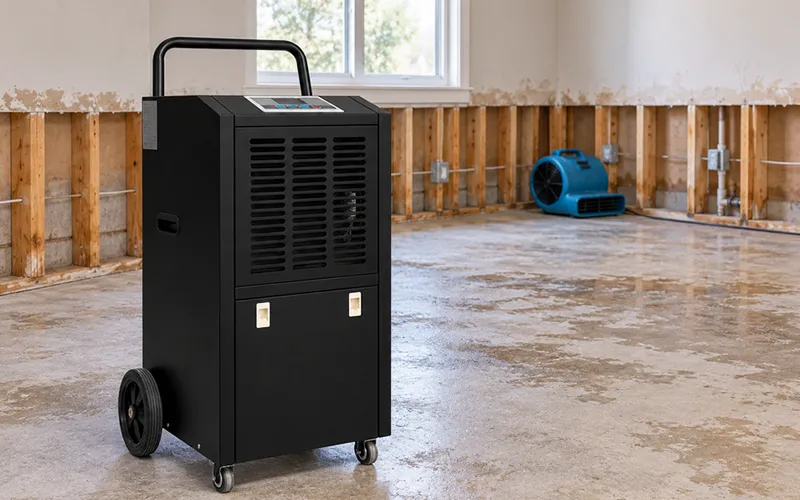
Water Damage Restoration

Support structural drying after flooding, leaks, or water intrusion by reducing airborne moisture alongside appropriate water extraction and air circulation.

FAQs

What Types of Construction Dehumidifiers Are Available?

Common construction dehumidifier options include portable refrigerant units, industrial models, and low-grain refrigerant (LGR) dehumidifiers. The right type depends on drying requirements and site conditions.

Selected models are listed for approximately 70–120 m². Actual coverage varies with ceiling height, moisture load, temperature, ventilation, and the layout of the construction area.

Yes. It can help manage indoor humidity in newly constructed buildings during wall, floor, plaster, and interior finishing work, particularly before the building is occupied.

Depending on the model, drainage options may include gravity drainage or a condensate pump. The appropriate configuration depends on the drain location and installation height.

Noise levels vary by compressor, fan design, and operating conditions. Ask us for the measured sound level of the specific model if noise is a project concern.

Routine maintenance typically includes cleaning air filters, inspecting coils, checking drainage, and examining electrical connections according to the manufacturer's instructions and operating environment.

Construction dehumidifiers are selected for demanding drying workloads, portability, and extended operation. Residential dehumidifiers are generally designed for household humidity control rather than intensive project drying.

Yes. Multiple units can support larger areas or separate drying zones when properly sized and positioned.

Electrical customization can be discussed based on target-market requirements, including voltage, frequency, and compatible components.

OEM/ODM services can support customized product specifications, branding, and packaging. Available options depend on the technical requirements, production feasibility, and order quantity.

Scroll to Top

Submit Your Inquiry