
High indoor humidity can make a home feel sticky, cause condensation, and create persistent musty odors. While a portable unit may solve occasional moisture problems, widespread or recurring humidity often requires a more reliable solution.
A dedicated dehumidifier is designed to maintain stable indoor humidity across larger areas or multiple rooms. Here are seven signs your home may need one.
1. Indoor Humidity Regularly Stays Above 60% RH
Indoor relative humidity is generally more comfortable when maintained around 30%–50%. Short-term increases are normal, but RH that regularly remains above 60% may indicate an ongoing moisture problem.
Common signs include:
- Sticky or clammy air
- Damp bedding or fabrics
- Musty odors
- Slow-drying towels
- Condensation on cool surfaces
Use a hygrometer to check several rooms. If high RH is common throughout the home, dedicated moisture control may be worth considering.
2. Condensation Frequently Appears on Windows and Walls
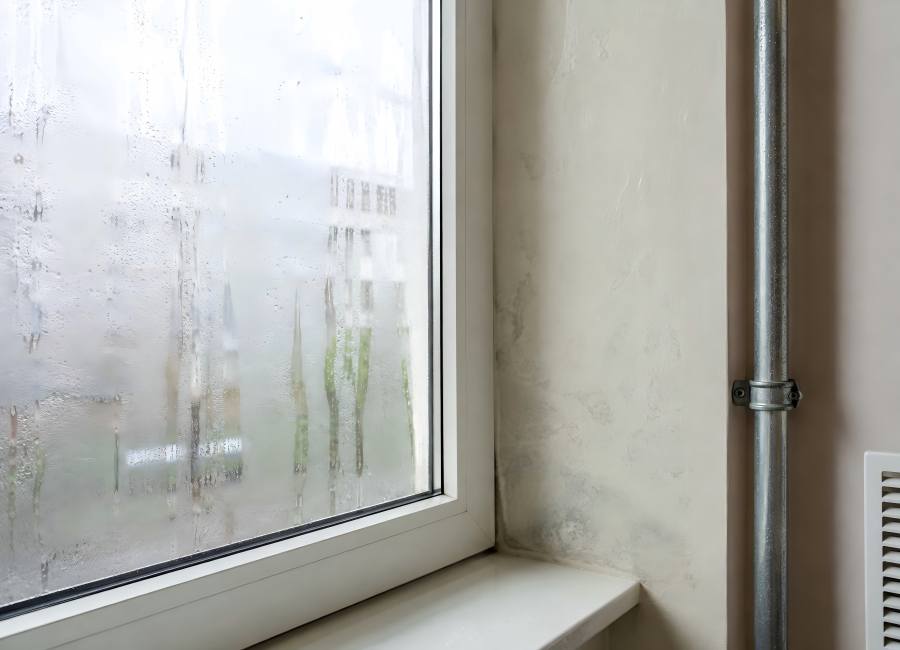
Condensation develops when moisture-laden indoor air encounters a cooler surface. Windows, pipes, exterior walls, and air vents are common places where water droplets appear.
Occasional condensation may be normal, but frequent moisture can affect paint, drywall, window frames, and wood finishes.
If condensation quickly returns after being wiped away, reducing indoor moisture may be more effective than simply removing the visible water.
3. Your Home Has Persistent Musty Odors
Musty smells often develop in damp spaces such as basements, closets, storage rooms, and laundry areas.
If the odor returns after cleaning, especially during humid or rainy weather, excess moisture may be contributing to the problem.
Before installing a dehumidifier, check for:
- Plumbing or roof leaks
- Foundation seepage
- Poor exterior drainage
- Damp crawl spaces
After these problems are addressed, a dedicated dehumidifier can help maintain a drier indoor environment.
4. Mold or Mildew Keeps Coming Back
Recurring mold or mildew can indicate that moisture conditions remain favorable even after visible growth has been cleaned.
Common problem areas include:
- Window frames
- Closet walls
- Basement corners
- Bathroom ceilings
- Areas behind furniture
- Stored boxes and fabrics
Leaks and water intrusion should always be repaired first. If high indoor humidity remains after those issues are fixed, continuous dehumidification can help maintain more stable conditions.
5. Several Rooms Feel Damp or Uncomfortable
Humidity becomes more difficult to manage when the problem affects several rooms instead of one isolated space.
Typical signs include sticky skin, damp-feeling bedding, slow-drying towels, heavy indoor air, and moisture inside closets.
A portable dehumidifier may work well for one room, but moving it throughout the house often leads to uneven humidity control.
A dedicated system can provide broader coverage and distribute dry air across multiple areas.
6. Your HVAC System Runs Often but Humidity Remains High
Air conditioners reduce some moisture as they cool, but their primary function is temperature control.
During mild but humid weather, an AC system may reach the desired temperature before running long enough to remove enough moisture.
Common causes include:
- High outdoor humidity
- Oversized air conditioners
- Frequent outdoor air entry
- Basement or crawl-space moisture
- Cooking, showering, and laundry
A dedicated dehumidifier operates according to humidity rather than temperature, allowing moisture removal even when additional cooling is unnecessary.
7. A Portable Dehumidifier Can No Longer Keep Up
Portable dehumidifiers are useful for localized moisture problems, but they may become impractical when humidity affects a large part of the house.
Signs that a larger system may be needed include:
- The unit runs almost continuously
- Target RH is rarely reached
- The tank requires frequent emptying
- Several portable units are needed
- Other rooms remain humid
- Humidity quickly returns after shutdown
A dedicated dehumidifier can provide higher capacity, automatic operation, continuous drainage, and wider coverage from one system.
What Is a Dedicated Dehumidifier?
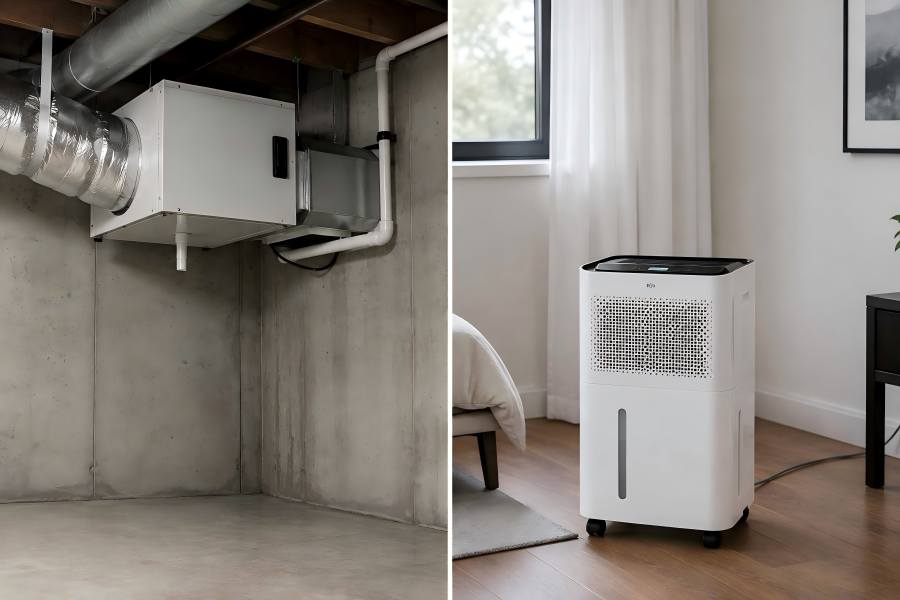
A dedicated dehumidifier is designed specifically to control indoor humidity. It can operate independently or connect to ductwork to serve several rooms.
Common configurations include:
- Whole-house dehumidifiers
- Ducted residential dehumidifiers
- High-capacity standalone units
- HVAC-integrated systems
Most systems include automatic humidity control and continuous drainage, reducing the need for manual operation or frequent tank emptying.
Dedicated vs. Portable Dehumidifier
| Feature | Dedicated Dehumidifier | Portable Dehumidifier |
| Coverage | Multiple rooms or whole home | Mainly one room |
| Installation | Fixed or ducted | Plug-in |
| Humidity Control | Centralized | Localized |
| Drainage | Usually continuous | Tank or drain hose |
| Capacity | Higher | Lower |
| Best For | Persistent humidity | Local moisture problems |
Portable units remain practical for occasional moisture in one area. Dedicated systems are better suited to widespread or long-term humidity problems.
When Is a Dedicated Dehumidifier Worth Considering?
A dedicated system may be worth considering when:
- RH regularly exceeds 60%
- Several rooms feel humid
- Condensation frequently returns
- Musty odors persist
- Mold or mildew repeatedly appears
- AC cooling does not solve the humidity problem
- Portable units run almost continuously
- The home is in a consistently humid climate
The more of these conditions occur together, the stronger the case for a centralized humidity-control solution.
How to Choose the Right Dedicated Dehumidifier
Choosing the right system requires more than simply matching equipment to home size.
Dehumidification Capacity
Capacity should match both the size of the home and its actual moisture load.
Consider:
- Home size
- Outdoor climate
- Desired indoor RH
- Basement or crawl-space moisture
- Building tightness
- Number of occupants
Homes of similar size can require different dehumidification capacities depending on these conditions.
Airflow and Coverage
Dry air needs to circulate through all areas that require humidity control.
For multi-room or multi-story homes, ducted distribution may provide more consistent humidity control than a single standalone unit.
Humidity Control
Automatic RH control allows the unit to start and stop according to actual humidity conditions.
Useful options may include digital humidistats, remote controls, Wi-Fi monitoring, scheduling, and HVAC coordination.
Drainage
Dedicated systems commonly use continuous drainage instead of a removable water tank.
Gravity drainage is simplest, while a condensate pump can be used when the drain point is above or away from the unit.
HVAC Integration
Some units work independently, while others integrate with existing HVAC ductwork.
Proper duct design helps distribute dry air evenly and avoids airflow or pressure problems.
Noise and Energy Efficiency
For equipment installed near bedrooms or living spaces, noise should be considered during selection and installation.
Correct sizing also improves operating efficiency by matching the system more closely to the home’s actual moisture demand.
Can an ERV or HRV Replace a Dedicated Dehumidifier?
ERVs and HRVs are primarily ventilation systems, while a dedicated dehumidifier actively removes moisture from indoor air.
An HRV is designed primarily to transfer heat between fresh and exhaust air. An ERV can also transfer some moisture, helping reduce the humidity impact of fresh-air ventilation.
However, during hot and humid weather, ventilation alone may not maintain the desired indoor RH.
In some homes, different systems work together:
- Air conditioner: controls temperature
- ERV or HRV: provides fresh-air ventilation
- Dedicated dehumidifier: controls excess humidity
The correct combination depends on climate, building design, and indoor moisture load.