
Industrial dehumidification plays an important role in protecting products, equipment, and production processes from moisture-related problems. Adsorption and absorption are two different moisture removal technologies used in industrial applications, but they rely on different principles, materials, and operating methods. Understanding their differences helps industries choose the right humidity control solution.
What Is Adsorption Dehumidification?
In adsorption dehumidification, a solid drying medium retains airborne water on its available surfaces. During the process, moisture molecules attach to the surface of the desiccant material instead of becoming part of its internal structure.
In industrial applications, adsorption technology is commonly used in desiccant dehumidifiers, especially rotor-type systems designed for continuous humidity control. These systems use specially selected materials with high surface areas and microscopic pores to attract and retain moisture from humid air.
Unlike refrigerant dehumidifiers that remove moisture through condensation, adsorption dehumidifiers directly extract water vapor from the air. This allows them to achieve very low humidity levels and maintain stable performance even in low-temperature environments.
Adsorption dehumidification is commonly selected for applications that require:
- Low relative humidity levels
- Low dew point conditions
- Precise humidity control
- Continuous operation
How Adsorption Dehumidifiers Work
An adsorption dehumidifier usually consists of a desiccant rotor, process air section, regeneration section, and heating system.
The operating process includes several stages:
1. Moist Air Enters the Adsorption Section
Humid air enters the dehumidifier and passes through the rotating desiccant wheel. The air contains water vapor that needs to be removed before entering the controlled environment.
2. Moisture Is Captured by the Desiccant Material
The desiccant material contains many microscopic pores and a large contact surface area. Water molecules are attracted and attached to the surface of the material.
As the air passes through the rotor, moisture content gradually decreases, producing dry air for the application area.
3. Dry Air Is Supplied to the Controlled Space
After moisture removal, the dry air exits the adsorption section and enters the production area, storage space, or process environment.
4. Desiccant Regeneration Removes Moisture
As the desiccant material becomes saturated, the rotor moves into the regeneration area. Heated air removes the collected moisture and restores the adsorption capacity of the material.
As the wheel turns between these two sections, moisture collection and desiccant renewal take place simultaneously, supporting ongoing operation.
Common Adsorption Materials
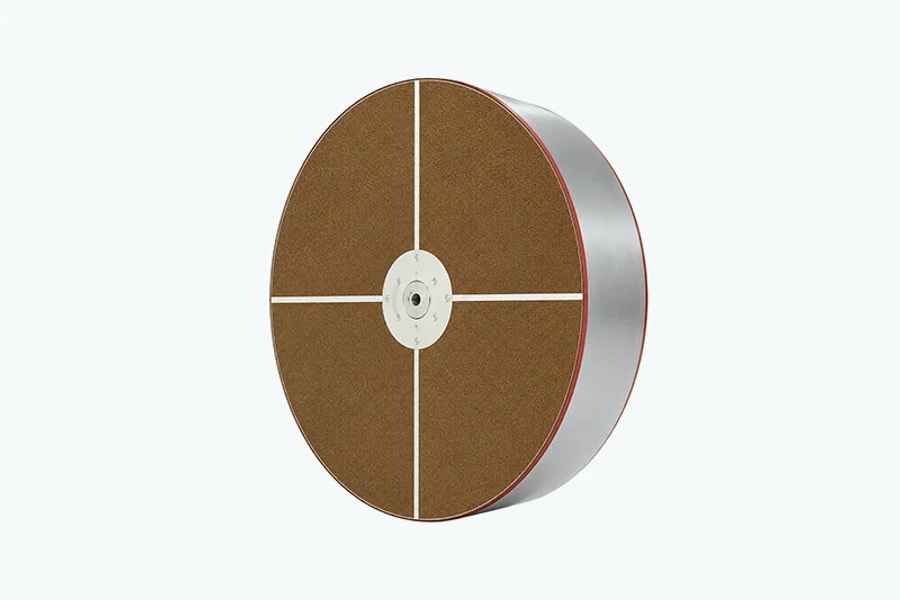
Different desiccant materials are selected according to humidity requirements, operating temperatures, and application conditions.
| Adsorption Material | Characteristics | Typical Applications |
| Silica Gel | Stable moisture adsorption performance and good regeneration ability | General industrial humidity control |
| Molecular Sieve | Strong moisture capture capability and suitable for very low humidity | Battery production, semiconductor manufacturing |
| Activated Alumina | Durable structure and reliable moisture removal performance | Industrial drying systems |
| Zeolite | High adsorption capacity under specific conditions | Specialized low dew point applications |
Silica Gel
Many industrial adsorption units use silica gel as their drying medium. It provides stable moisture removal performance and can operate effectively across a wide range of humidity conditions.
Molecular Sieve
Molecular sieves have a uniform microporous structure and a strong affinity for water, helping them remove moisture even at low water-vapor partial pressures. This makes molecular sieves useful where the process air must contain very little residual water vapor.
Activated Alumina
Activated alumina provides good mechanical strength and moisture adsorption performance. It is commonly used in industrial drying and air treatment systems.
Advantages of Adsorption Dehumidification
Achieves Very Low Humidity Levels
One of the main advantages of adsorption dehumidification is its ability to achieve extremely low humidity levels. This makes it suitable for industries where moisture must be strictly controlled.
Performs Well at Low Temperatures
Because adsorption does not rely on condensation, the technology maintains effective moisture removal performance in cold environments.
Provides Stable Continuous Operation
Rotating desiccant systems allow simultaneous moisture adsorption and regeneration, supporting continuous industrial operation.
Suitable for Precision Industries
Adsorption dehumidifiers are widely used where humidity fluctuations may affect product quality, production efficiency, or equipment reliability.
What Is Absorption Dehumidification?
Absorption dehumidification removes moisture by using liquid or chemical absorbent materials that capture water vapor from the air. Unlike adsorption, where moisture remains attached to a solid surface, absorption involves moisture entering and being retained within the absorbent material.
Absorption systems commonly use liquid desiccants or chemical solutions that have a strong attraction to water molecules. When the absorbent becomes diluted or saturated, regeneration is required to restore its moisture removal capability.
Common absorbent materials include:
- Lithium chloride solutions
- Calcium chloride
- Glycol-based solutions
Absorption technology is generally used in specialized industrial applications where liquid moisture capture methods are suitable.
How Absorption Dehumidifiers Work
Absorption dehumidification systems typically use an absorbent solution that directly contacts humid air.
The working process includes:
1. Humid Air Contacts the Absorbent
Moist air passes through a chamber containing an absorbent solution. The absorbent material attracts water vapor from the air.
2. Moisture Is Captured Inside the Absorbent
Water molecules move from the air into the absorbent solution. The transfer leaves less water vapor in the treated airstream.
3. Dry Air Leaves the System
After moisture removal, treated air is supplied to the required area or process.
4. Absorbent Regeneration
When the absorbent solution reaches a certain moisture concentration, heat or another regeneration process removes the collected moisture and restores absorption performance.
Common Absorption Materials
| Absorption Material | Characteristics | Typical Uses |
| Lithium Chloride | Strong moisture absorption capability | Liquid desiccant humidity control systems |
| Calcium Chloride | Cost-effective moisture capture | General drying applications |
| Glycol Solutions | Suitable for specialized moisture control processes | Industrial applications |
Lithium Chloride
Lithium chloride solutions have strong moisture absorption characteristics and are commonly used in liquid desiccant systems requiring continuous humidity removal.
Calcium Chloride
Calcium chloride is widely known for its moisture-attracting ability and is often used in basic moisture control applications.
Glycol Solutions
Glycol-based absorbents can be used in specific industrial processes where chemical moisture capture is required.
Advantages of Absorption Dehumidification
Effective Moisture Removal
Absorption systems can continuously capture moisture when the absorbent concentration and regeneration process are properly controlled.
Suitable for Specialized Industrial Processes
Some industries prefer absorption technology because it can integrate with existing chemical or process systems.
Continuous Operation Capability
With proper regeneration methods, absorption systems can provide long-term moisture control.
Adsorption vs. Absorption Dehumidification: Key Differences
Although both technologies remove moisture from air, their moisture capture mechanisms, materials, and applications are different.
| Comparison Factor | Adsorption Dehumidification | Absorption Dehumidification |
| Moisture Removal Principle | Water molecules attach to the surface of solid desiccants | Moisture enters and combines with liquid or chemical absorbents |
| Main Materials | Silica gel, molecular sieve, activated alumina, zeolite | Lithium chloride, calcium chloride, glycol |
| Equipment Type | Desiccant rotor dehumidifier | Liquid desiccant system |
| Humidity Capability | Suitable for low RH and low dew point requirements | Suitable for specific industrial moisture removal |
| Regeneration Method | Heated air removes moisture from desiccant | Heating or concentration adjustment restores absorbent |
| Maintenance Focus | Desiccant condition, filters, airflow | Absorbent concentration and liquid circulation |
Moisture Removal Mechanism
The biggest difference between the two technologies is how moisture interacts with the moisture-removing material.
Adsorption:
- Moisture attaches to the surface of solid desiccants.
- The process is mainly based on physical attraction.
- Desiccant materials can be regenerated repeatedly.
Absorption:
- Moisture penetrates into liquid or chemical absorbents.
- The process changes the condition of the absorbent material.
- The absorbent requires regeneration or concentration control.
Humidity Control Capability
When residual moisture must be kept especially low, engineers often consider a solid-desiccant system.
Typical applications include:
- Lithium battery manufacturing
- Semiconductor production
- Pharmaceutical facilities
- Cleanrooms
- Precision electronics manufacturing
Absorption systems are more suitable for applications where liquid desiccant technology can meet process requirements.
Operating Temperature Performance
Temperature conditions are another important factor when selecting a dehumidification technology.
Adsorption systems perform effectively in:
- Low-temperature environments
- Cold storage areas
- Dry rooms
- Temperature-sensitive production facilities
Because adsorption does not depend on surface condensation, it can continue removing moisture even when air temperatures are low.
Absorption performance depends more on the characteristics of the absorbent solution and the operating conditions of the system.
Energy Consumption and Regeneration
Both adsorption and absorption technologies require regeneration energy, but their regeneration methods are different.
Adsorption dehumidifiers typically use heated regeneration air to remove moisture from the desiccant rotor.
Energy consumption depends on:
- Required humidity level
- Regeneration temperature
- Airflow volume
- Operating hours
Absorption systems require energy to remove moisture from the absorbent solution and restore its concentration.
Energy expenditure therefore needs to be evaluated for the actual installation, including its heat supply and operating demands.
Adsorption vs. Absorption Dehumidification: Performance and Selection Guide
Choosing between adsorption and absorption technology requires consideration of humidity requirements, temperature conditions, airflow needs, and maintenance expectations.
Humidity Requirements
Start the selection process by defining how dry the air needs to be.
Adsorption dehumidification is suitable when:
- Relative humidity below 30% is required
- Low dew point air is needed
- Moisture-sensitive materials must be protected
Absorption systems may be suitable when:
- Moderate humidity control is required
- Liquid absorbent systems are acceptable
- Specialized moisture removal processes are involved
Operating Temperature
Operating temperature affects system performance and efficiency.
Adsorption dehumidifiers are widely used in:
- Cold environments
- Low-temperature storage
- Battery dry rooms
- Precision manufacturing areas
Absorption systems require suitable temperature conditions to maintain absorbent performance.
Airflow Requirements
Industrial users should evaluate airflow requirements before selecting a dehumidification system.
Important factors include:
- Room size
- Moisture load
- Production process
- Ventilation requirements
Large industrial spaces may require customized solutions based on airflow and humidity targets.
Energy and Maintenance Costs
Long-term operating costs should be considered during technology selection.
Important factors include:
- Initial equipment investment
- Regeneration energy consumption
- Maintenance requirements
- Component replacement frequency
Adsorption systems mainly require inspection of desiccant wheels, filters, and airflow conditions.
Absorption systems require monitoring of absorbent concentration, liquid circulation, and regeneration performance.
Industrial Applications of Adsorption and Absorption Dehumidification
Adsorption Dehumidification Applications
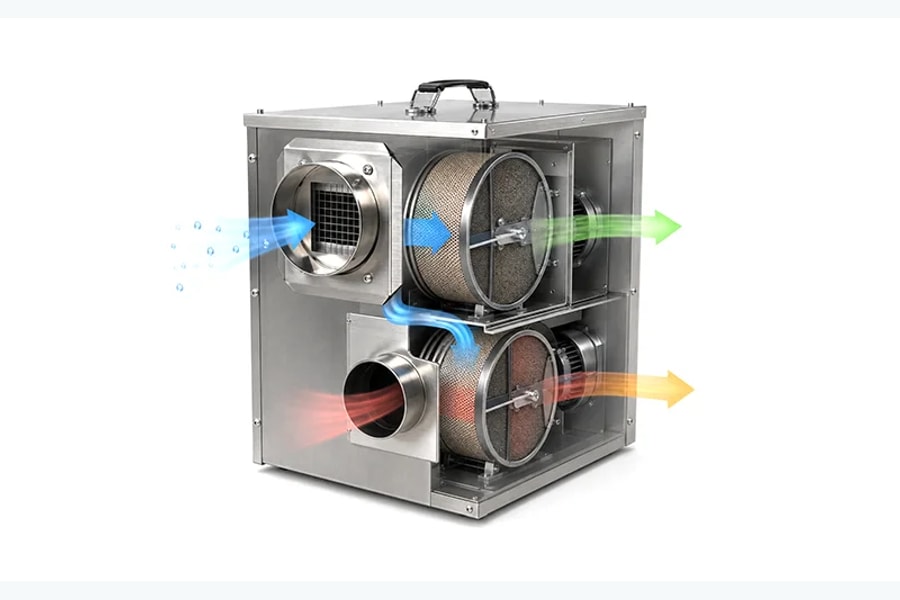
The following industrial processes commonly use adsorption to keep moisture within tightly specified limits.
Battery Manufacturing
Lithium battery production requires extremely dry environments because moisture can affect material performance and product quality. Adsorption desiccant dehumidifiers are commonly used to provide low dew point air for battery manufacturing processes.
Pharmaceutical Manufacturing
Pharmaceutical production requires stable environmental conditions to protect raw materials and maintain consistent product quality.
Electronics Manufacturing
Electronic components are sensitive to moisture exposure. Adsorption dehumidifiers help maintain controlled humidity levels during manufacturing and storage.
Cleanrooms
Cleanrooms often require precise humidity management. Adsorption systems provide reliable moisture control for sensitive production environments.
Absorption Dehumidification Applications
Absorption technology is used in specialized industrial fields where liquid moisture capture is appropriate.
Typical applications include:
- Chemical processing
- Industrial drying systems
- Gas treatment processes
- Large ventilation systems
These systems are usually designed according to specific process requirements and operating conditions.