
A dehumidifier is better for excess moisture; a properly sized mechanical HEPA air purifier is better for airborne particles. Use both when both problems exist. Neither repairs leaks or removes existing mold.
Which device helps most depends on the source of dampness, circulating allergens, and settled household dust over time.
Two Appliances, Two Different Jobs
A dehumidifier and an air purifier can operate in the same room, but their central functions are different. One manages water vapor; the other removes particles carried through its filter.
What a Dehumidifier Actually Removes
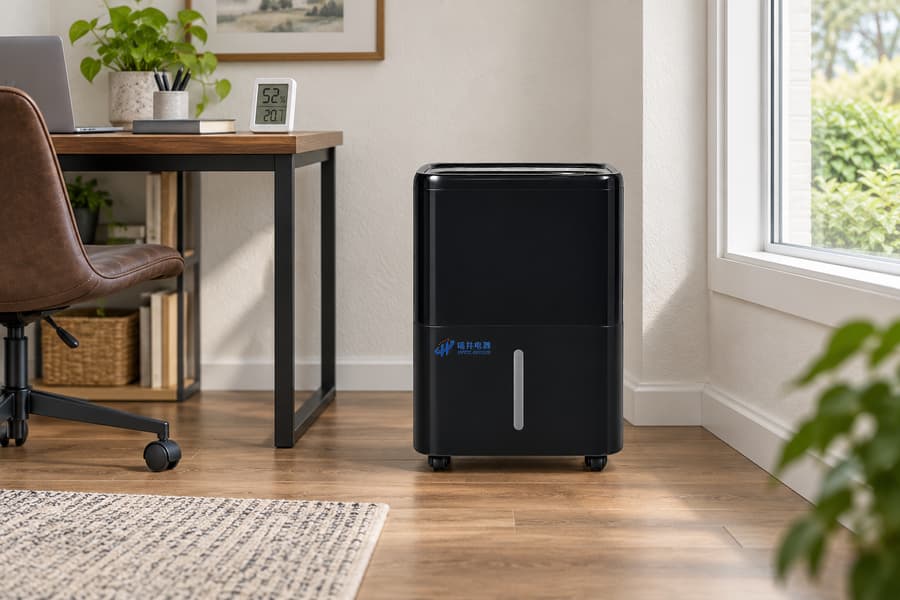
Most household compressor dehumidifiers draw humid air across cooled coils. Water condenses, collects in a tank or drains away, and the processed air returns to the room.
Reducing humidity can limit conditions favorable to some biological contaminants and moisture damage. However, a standard dehumidifier is not a substitute for dedicated particle filtration or surface cleaning.
What a Mechanical HEPA Air Purifier Removes
A mechanical HEPA purifier pulls room air through a high-efficiency particle filter. Particles that pass through the device can be captured, including airborne pollen, dust, and some mold-related material.
Filtration only affects air that reaches the device. An air purifier does not remove water vapor, dry damp drywall, repair plumbing, or collect debris embedded in carpeting.
| Comparison | Dehumidifier | Mechanical HEPA Air Purifier |
| Primary task | Remove water vapor | Capture airborne particles |
| Useful measurement | Liters or pints removed per day | Clean Air Delivery Rate (CADR) |
| Mold-related benefit | Manage excessive humidity | Capture some particles released into air |
| Dust mite concerns | Reduce favorable moisture conditions | Filter some airborne allergen-bearing particles |
| Settled dust and established mold | Requires cleaning and source correction | Requires cleaning and source correction |
| Routine upkeep | Drainage, tank and intake cleaning | Filter care and replacement |
Which Is Better for Mold: Moisture Control or Air Filtration?
For persistent indoor dampness, controlling moisture takes priority. Mold needs accessible moisture, whether it comes from humid air, condensation, plumbing leaks, roof damage, or flooding.
The CDC’s mold guidance emphasizes correcting moisture problems and cleaning existing mold. Its household advice uses 50% RH as an upper limit for routine moisture management.
Start With the Moisture Source
Check around windows, plumbing fixtures, exterior walls, basement corners, and stored materials. Water staining, peeling paint, persistent mustiness, and visible growth deserve inspection rather than automatic appliance purchases.
A leaking pipe can keep wallboard wet even when a nearby hygrometer shows humidity within the recommended range. Likewise, cold surfaces can collect condensation while average room readings appear reasonable.
For general household management, 30–50% relative humidity is a practical working range. For dust-mite-sensitive households, aiming below 50% may be useful, without treating that number as a guarantee.
What an Air Purifier Can and Cannot Do Around Mold
A HEPA purifier can capture some mold spores and fragments after they become airborne. Its benefit depends on airflow, positioning, filtration performance, and how frequently particles are released.
It cannot remove a mold colony attached to wallpaper or hidden behind cabinetry. Until the wet material is dealt with, an air cleaner leaves the source of new mold growth in place.
Deal With Existing Growth Safely
The priority is to stop water intrusion, dry affected materials, and address contaminated surfaces appropriately. Extensive contamination, recurring growth, or hidden damage may require qualified professional assessment.
After flooding or a significant leak, prompt drying matters. Some soaked or mold-contaminated porous items will need to be discarded; continuing to run equipment cannot make every damaged item salvageable.
Match Allergy Concerns to the Type of Exposure
Airborne Pollen, Pet Particles, and Mold Fragments
Unlike humidity control, filtration can directly reduce concentrations of particles moving through a room. Its impact depends on sources, air circulation, and whether the purifier runs consistently.
A bedroom receiving outdoor pollen differs from one where pet allergens collect on upholstery. In both cases, managing the source and cleaning surfaces can complement particle filtration.
The EPA guidance for home filtration places particle removal alongside controlling sources and bringing in suitable outdoor air. It does not suggest an air cleaner can remove every household pollutant.
Dust Mites: Lower Humidity Does Not Remove Old Allergens
Dust mites favor warm, humid microenvironments, including mattresses and upholstered furniture. Keeping room humidity lower may make conditions less favorable, but bedding can retain localized moisture.
Reduced humidity does not instantly remove allergens already present in fabrics or dust. Material from mites can remain even when their living conditions become less suitable.
Use washable bedding, appropriate mattress and pillow covers, and consistent cleaning alongside moisture management. A purifier only captures allergen-bearing dust when those particles become airborne and reach the filter.
Why Settled Dust Needs a Different Approach
Some larger particles quickly settle on shelves, flooring, bedding, and curtains. A purifier cannot reach material that remains attached to those surfaces, regardless of its advertised filter efficiency.
Cleaning can also temporarily stir up dust. A HEPA-equipped vacuum, damp dusting, and washable fabrics help address reservoirs rather than relying on filtration alone.
Consider these complementary practices:
- Bedding: Wash and dry regularly, following fabric instructions, and use suitable allergen-resistant covers where needed.
- Floors: Vacuum with effective filtration and clean hard surfaces without scattering accumulated dust.
- Pets: Manage access to sleeping areas and clean places where hair and dander collect.
- Moisture: Track the room’s humidity pattern over several days and investigate any damp surfaces.
Environmental Control Is Not Medical Treatment
Exposure reduction may be worthwhile, but it cannot identify the cause of sneezing, coughing, or irritation. Symptoms vary, and not every respiratory complaint is caused by humidity or allergens.
The CDC notes that people respond differently to damp, moldy environments. Persistent or serious symptoms warrant appropriate medical evaluation, not an appliance-based diagnosis.
How to Compare CADR With Dehumidifier Capacity
Dehumidifier Capacity: Liters or Pints per Day
Moisture removal capacity represents how much water a machine can extract over a stated period under specified test conditions. It is commonly expressed in liters/day or pints/day.
A water tank’s volume is different. Tank capacity determines how much condensate can accumulate before emptying, not how much water the machine can remove over a full day.
For example, a machine with a modest tank could have substantial daily extraction capacity if connected to continuous drainage. Conversely, a large tank does not prove strong moisture removal.
Temperature and initial humidity strongly influence extraction. Refrigerant dehumidifiers generally remove less moisture in cooler or drier conditions than they do under warm, humid rating conditions.
Compare manufacturers’ stated test temperatures and relative humidities before interpreting capacity figures. For a cool basement, ask about performance at realistic operating conditions and available defrost provisions.
Air Purifier CADR: Clean Air Delivered for Particle Removal
CADR measures the rate at which an air cleaner delivers particle-cleaned air under defined test conditions. Check the units on the rating: cfm and m³/h express airflow using different volume and time units.
A higher CADR can support a larger room or more frequent particle removal, all else equal. Choose a rating appropriate for actual room area and ceiling height.
Check whether published CADR reflects the highest fan setting. If noise forces regular operation at a quieter speed, the air-cleaning rate may be lower than the headline value.
The EPA selection advice for air cleaners ties the required CADR to the space the appliance will serve. It also explains that longer operation and higher fan speeds generally increase filtration.
What Room Coverage Claims Leave Out
Two rooms with identical floor area may need different equipment because of ceiling height, open doorways, moisture generation, outdoor air exchange, and daily occupancy patterns.
For dehumidifiers, measure humidity in multiple locations and consider connected spaces. For purifiers, focus on the air volume being served and whether furniture obstructs circulation.
When Does Using Both Devices Make Sense?
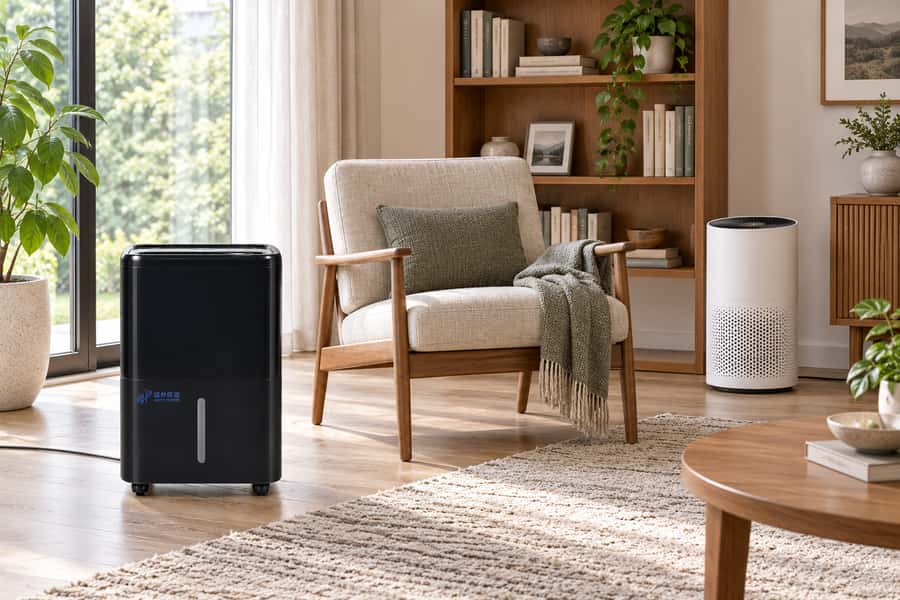
A humid bedroom with seasonal pollen exposure illustrates the distinction. Dehumidification addresses excessive moisture, while HEPA filtration addresses particles circulating in the occupied space.
A basement with damp surfaces and visible mold needs repairs and cleanup first. After addressing those sources, dehumidification may help manage humidity; filtration can provide supplemental particle reduction.
| Household Condition | Main Priority | Possible Appliance Approach |
| Consistently high room humidity, no major particle concern | Identify moisture sources and lower humidity | Dehumidifier |
| Seasonal airborne pollen in a relatively dry room | Limit entry and filter airborne particles | HEPA purifier |
| Humid bedroom with dust mite concerns | Humidity management and thorough bedding care | Dehumidifier; add purifier for airborne particles |
| Active leak or visible mold | Repair, dry, and clean affected areas | Neither appliance replaces remediation |
| High humidity plus pet-related airborne particles | Address moisture and particle exposure separately | Both, if sized appropriately |
| Persistent dust on furniture | Reduce sources and clean settled dust | Cleaning first; filtration may supplement |
Should You Run Both in the Same Room?
Yes, if both functions are needed and the room can accommodate them safely. Allow separate, unobstructed intake and exhaust paths so neither unit interferes with the other.
What Should You Try Before Buying Two Appliances?
Check the hygrometer, inspect for moisture damage, and identify obvious particle sources. Improve appropriate ventilation, repair leaks, and establish a cleaning routine before evaluating remaining needs.
The EPA’s indoor air quality guidance prioritizes source control, suitable ventilation, and supplemental filtration. Before opening windows, consider whether the incoming air would add water vapor or unwanted pollutants.
How Much Do Dehumidifiers and Air Purifiers Cost to Operate?
A fair comparison considers purchase cost, electricity, consumables, maintenance, and how many hours each device actually operates. There is no reliable universal ranking without specific models and usage patterns.
Calculate Electricity Use Without Guessing Prices
Start with the electrical input shown on the product label or specification sheet. Then estimate realistic daily operating hours rather than assuming both machines run continuously at maximum power.
Energy use (kWh) = Rated power (W) × Operating hours ÷ 1,000. Multiply the resulting kilowatt-hours by your electricity tariff to estimate energy cost for that period.
Use the result as a budget estimate, then compare it with measured consumption if greater accuracy is needed. Thermostat or humidistat cycling, fan settings, temperature, and variable-power operation can change actual consumption substantially.
Maintenance Changes Ownership Cost
A dehumidifier may require tank emptying, intake cleaning, drainage inspection, and occasional attention to frost or blocked airflow. A clogged hose can interrupt moisture management even when the compressor functions.
An air purifier usually requires periodic filter replacement. Costs depend on filter type, replacement schedule, local availability, and whether compatible replacements remain accessible throughout the product’s life.
Noise is also an operating consideration: a machine switched off because it disturbs sleep provides no benefit during those hours. Compare practical settings, not merely peak specifications.
Where Should You Place and Maintain Each Appliance?
Dehumidifier Placement and Humidity Monitoring
Keep intake and exhaust openings clear, and use the clearances recommended by the manufacturer. Choose a level, secure position close enough to serve the damp room, with the unit protected from splashes or standing water.
For continuous drainage, verify hose slope, connection security, and the destination drain. Where gravity drainage is impractical, investigate whether a compatible pump configuration is available.
Use a separate hygrometer to monitor patterns over several days. Compare readings near the problem area with those elsewhere, especially after showers, laundry, rain, or changes in heating.
Remember that a dry room reading cannot certify that a wall cavity or carpet is dry. Continue checking suspicious stains, condensation, and musty materials even after humidity improves.
Air Purifier Placement and Effective Runtime
Position the purifier where air can circulate without blocked inlets, heavy curtains, or furniture crowding its outlet. Bedrooms and regularly occupied living areas often provide practical locations.
Use a fan setting that balances acceptable noise with sufficient filtration. Short bursts at maximum speed may be less useful than consistent operation at a setting people will tolerate.
For particle filtration, choose a verified mechanical HEPA design and suitable CADR. Avoid products intentionally producing ozone; the EPA identifies ozone as a respiratory irritant.
Keep Both Devices Clean
Follow model-specific maintenance instructions, disconnect power before appropriate cleaning, and inspect accessible components. Avoid washing HEPA filters unless the manufacturer specifically identifies them as washable.
- Dehumidifier tank: Empty and clean according to instructions, checking for residues or odors.
- Drainage system: Inspect hoses, fittings, and pumps for obstructions and leaks.
- Airflow: Remove dust from accessible grilles without damaging internal parts.
- Purifier filter: Replace at the specified interval or when indicated by applicable guidance.
How to Choose a Household Solution That Fits Your Home
A Practical Household Selection Checklist
Before purchasing, record your room dimensions, seasonal conditions, maintenance preferences, and evidence of dampness or particle sources. These details make comparisons more useful than generalized advertising claims.
- Primary concern: Is it elevated humidity, airborne pollen or pet particles, settled dust, or a combination?
- Moisture inspection: Have leaks, condensation points, and existing mold been addressed independently?
- Real conditions: What temperature and humidity does the room experience during normal use?
- Correct metric: Are you comparing water removal capacity for dehumidifiers or CADR for purifiers?
- Operation: Can the device run at an acceptable noise level and reach an appropriate electrical outlet?
- Upkeep: Is tank access, drainage, cleaning, or replacement-filter supply manageable?
Household Dehumidifier Configurations and WetWells
For moisture-related applications, the WetWells household dehumidifier range describes portable and whole-house configurations, alongside options involving capacity, controls, and drainage arrangements.
Selection should begin with the room’s moisture load and temperature rather than relying on nominal floor coverage. Portable units may suit individual rooms; connected areas can require a different design.
Water tanks offer flexible placement but require attention. Drain hoses and optional pump arrangements can reduce manual emptying when compatible with the chosen installation and available drainage route.
For distributors and OEM customers, WetWells also describes customization of cabinet design, control interfaces, and electrical configurations. Confirm actual model availability, operating data, and specifications before making a product claim.
A dehumidifier remains moisture-control equipment even if a particular configuration includes additional filtration. Verify any claimed particle-filter performance separately instead of assuming it matches a dedicated CADR-rated purifier.