
A home dehumidifier generally controls indoor humidity better than an air conditioner because it removes moisture independently of cooling demand. Air conditioners also remove humidity, but their primary function is temperature regulation.
Both appliances improve indoor comfort, but their effectiveness depends on room temperature, moisture levels, equipment capacity, and operating conditions.
Where Does the Moisture Go in Each Appliance?
In a compressor dehumidifier, as in an AC system, refrigeration creates the cold surface that collects water from passing air. However, they handle temperature and humidity differently, making them suitable for different conditions.
How Does a Home Dehumidifier Work?
With a home dehumidifier, the user chooses an RH setting and the appliance collects water as needed to approach that target.
Most residential compressor dehumidifiers operate through a refrigeration cycle involving several components:
- Air Intake: A fan draws humid indoor air into the dehumidifier.
- Cooling Coil: Water droplets form at the evaporator when its surface cools the passing air below its dew point.
- Water Collection: Condensed moisture flows into a removable tank or through a drainage hose.
- Air Reheating: The processed air passes over the condenser coil before returning to the room.
- Humidity Regulation: A built-in humidistat monitors humidity and controls operation according to the selected setting.
Unlike air conditioners, conventional portable dehumidifiers release their refrigeration heat into the same room. Consequently, they generally raise room temperature slightly during operation.
This design allows dehumidifiers to remove moisture even when indoor temperatures are already comfortable and additional cooling is unnecessary.
Many residential models also provide automatic humidity control, continuous drainage, adjustable fan speeds, and automatic shutdown when the water tank reaches capacity.
How Does an Air Conditioner Remove Humidity?
An air conditioner primarily cools indoor air, but moisture removal occurs naturally during the refrigeration process.
When warm, humid air passes over the cooling coil, its temperature decreases. If the coil surface is below the air’s dew point, water vapor condenses into liquid.
The collected moisture drains away through the air conditioner’s condensate system, while the cooled air returns to the living space.
However, conventional air conditioners typically operate according to thermostat settings rather than directly responding to indoor relative humidity.
When the room reaches the desired temperature, the compressor may stop even if humidity remains higher than preferred.
Some modern air conditioners include dedicated dry modes, variable-speed compressors, or enhanced humidity controls. These features can improve moisture management, although performance depends on the system’s design.
Comparing the Jobs These Appliances Are Built to Do
Although these appliances share refrigeration components, their controls and heat-rejection arrangements serve different household needs. Dehumidifiers concentrate on moisture removal, while air conditioners prioritize temperature reduction.
Understanding these differences helps homeowners determine which appliance provides better humidity control under specific indoor conditions.
| Comparison Factor | Home Dehumidifier | Air Conditioner |
| Primary Function | Controls indoor humidity | Controls indoor temperature |
| Moisture Removal | Dedicated dehumidification | Cooling-related dehumidification |
| Temperature Effect | Generally warms the room slightly | Lowers indoor temperature |
| Humidity Settings | Commonly includes adjustable RH control | Depends on model and features |
| Operating Conditions | Can operate without cooling demand | Usually removes moisture during cooling |
| Moisture Removal Capacity | Rated in pints or liters per day | Depends on cooling capacity and operating conditions |
| Energy Efficiency | Evaluated through dehumidification efficiency | Primarily evaluated through cooling efficiency |
| Typical Applications | Basements, laundry rooms, damp living spaces | Bedrooms, living rooms, and entire homes requiring cooling |
Temperature Control vs. Humidity Control
Air conditioners are designed to maintain a comfortable temperature. Although they remove moisture during cooling, humidity management may become less effective when cooling demand decreases.
Dehumidifiers address this limitation by responding directly to humidity levels rather than waiting for the indoor temperature to rise.
For example, a living room may remain at a comfortable temperature during rainy weather while its relative humidity increases.
Running an air conditioner could make the room unnecessarily cold. A dehumidifier can remove moisture without intentionally cooling the space.
Installation and Maintenance Differences
Portable home dehumidifiers are generally easy to position and operate. Most require an electrical outlet, adequate airflow, and regular condensate removal.
Air conditioners usually require more specific installation arrangements, particularly central systems and window-mounted units. Portable air conditioners also need suitable exhaust connections.
Both appliances require filter cleaning and condensate management. Proper maintenance helps preserve airflow, moisture removal performance, and reliable operation.
Which Removes More Humidity: A Dehumidifier or an Air Conditioner?
A dehumidifier generally provides better dedicated humidity control, but an air conditioner can remove substantial amounts of moisture when cooling demand is high.
The actual amount of water removed depends on equipment capacity, indoor conditions, airflow, and operating duration.
Humidity Removal Capacity
Dehumidifier capacity is commonly expressed in liters per day (L/day) or pints per day, indicating how much moisture the appliance removes under specified test conditions.
Higher-capacity models are designed to handle greater moisture loads, making them suitable for larger rooms or particularly damp indoor environments.
However, rated moisture removal should not be interpreted as a guaranteed daily result in every home.
Actual dehumidification capacity varies with indoor temperature and relative humidity. Manufacturers typically determine rated capacities under standardized testing conditions that may differ from everyday indoor environments.
Air conditioners also remove moisture, sometimes at substantial rates during extended cooling operation. However, their published cooling capacity does not directly indicate daily water removal.
An air conditioner’s dehumidification performance depends on coil temperature, airflow, indoor humidity, compressor operation, and the duration of cooling cycles.
Therefore, comparing dehumidifier capacity directly with an air conditioner’s cooling capacity does not establish which removes more water.
Humidity Control Accuracy
Most modern home dehumidifiers include a humidistat that allows users to select a desired relative humidity level.
For example, homeowners can select a target of 50% RH. The dehumidifier then adjusts its operation as indoor humidity changes.
A room that is already cool enough may still need drying; humidity-led operation lets the appliance respond to that remaining moisture load.
Conventional air conditioners generally use thermostats to regulate cooling. Their compressors may stop after reaching the temperature setpoint, even when indoor humidity remains elevated.
Oversized air conditioners can experience particularly short cooling cycles, reducing the time available for effective condensation and moisture removal.
Proper equipment sizing is therefore essential. An oversized cooling system may lower the room temperature quickly without operating long enough to provide adequate dehumidification.
Air conditioners with humidity sensors, variable-speed operation, or dedicated dehumidification modes can provide more effective moisture control than basic temperature-controlled systems.
Nevertheless, humidity regulation accuracy depends on sensor quality, equipment configuration, and actual operating conditions rather than appliance category alone.
Performance in Different Conditions
The effectiveness of dehumidifiers and air conditioners changes significantly with indoor temperature and moisture conditions.
Hot and Humid Weather
Air conditioners are highly practical when indoor temperatures and humidity levels are both elevated.
Continuous or extended cooling operation allows moisture to condense on the cooling coil while room temperature decreases.
A separate dehumidifier may be unnecessary if the air conditioner maintains comfortable temperatures and acceptable humidity levels.
Mild Temperatures with High Humidity
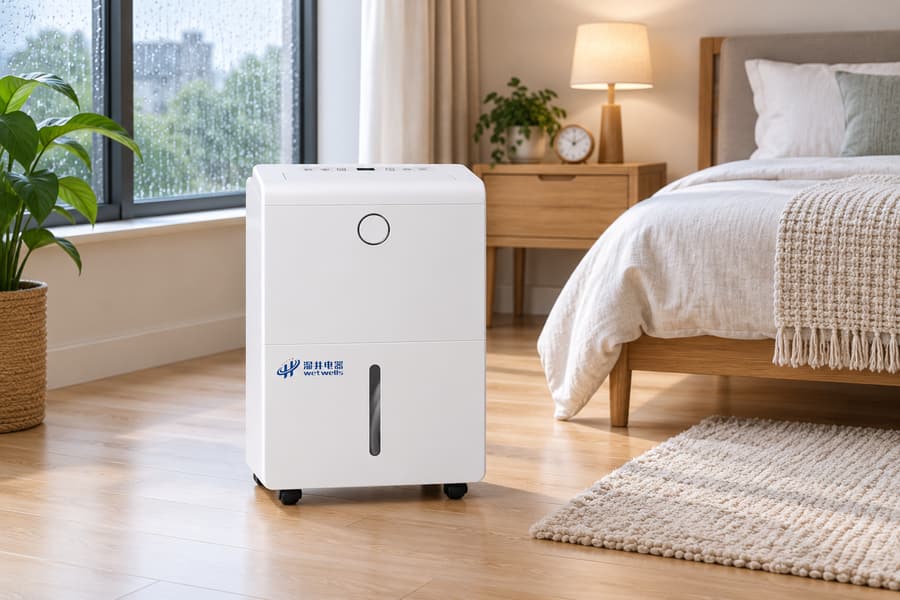
A dehumidifier is often more suitable when indoor temperatures are comfortable but relative humidity remains elevated.
During rainy weather or mild seasons, an air conditioner may run too briefly to remove sufficient moisture.
A dedicated dehumidifier can continue operating according to humidity demand without requiring additional cooling.
Cool and Damp Environments
Basements and other cool indoor spaces frequently experience persistent moisture problems without significant cooling requirements.
A dehumidifier can provide targeted moisture removal, although conventional compressor models generally become less effective as temperatures decrease.
For consistently cold environments, homeowners should select equipment with suitable low-temperature operating capabilities or consider alternative dehumidification technologies.
Dehumidifier vs. Air Conditioner: Which Is More Energy Efficient?
Neither appliance is universally more energy efficient. Start by identifying the service required: lowering temperature, extracting water, or handling both loads at once.
A wattage figure describes electrical demand, but it does not reveal how much useful cooling or drying that electricity delivers.
Energy Consumption and Operating Costs
A dehumidifier consumes electricity to operate its compressor, fan, and electronic controls. Its energy consumption depends on moisture load, selected humidity settings, efficiency, and operating time.
Air conditioners use electricity to operate cooling components and associated fans. Their energy consumption depends on cooling demand, system efficiency, thermostat settings, and building conditions.
A higher electrical power rating does not automatically mean that an appliance is less efficient at removing moisture.
The Integrated Energy Factor (IEF) relates a dehumidifier’s tested water collection to its electricity consumption, including specified standby or off periods. Its unit is L/kWh.
A higher IEF indicates more efficient moisture removal under the applicable test procedure.
Air conditioner efficiency is typically evaluated using cooling efficiency metrics, such as CEER, EER, or SEER2, depending on equipment type.
These metrics measure different functions and cannot be directly compared to determine which appliance removes moisture more efficiently.
Another consideration is heat generation. A portable dehumidifier releases heat indoors, potentially increasing the cooling load when an air conditioner operates simultaneously.
Consequently, the lowest-cost operating strategy depends on both moisture removal requirements and the total energy consumption of the home.
For a hypothetical U.S. household calculation prepared in October 2026, assume a dehumidifier draws 0.30 kW while running for eight hours daily and electricity costs USD 0.20/kWh. Energy use is 2.4 kWh/day, costing USD 0.48/day or USD 14.40 over 30 days. The 300-watt draw, eight-hour daily runtime and twenty-cent electricity rate are chosen solely to demonstrate the arithmetic; check your own meter and utility bill. The estimate excludes purchase, installation, taxes, fixed utility charges, and any additional AC energy.
When Is a Dehumidifier More Efficient?
A dehumidifier can be a more practical energy choice when humidity is excessive but indoor temperatures do not require cooling.
Instead of operating an air conditioner primarily to remove moisture, homeowners can use a dedicated appliance that responds directly to humidity levels.
Typical situations include:
- Comfortable Indoor Temperatures: Moisture removal is needed without additional cooling.
- Damp Basements: Persistent humidity requires dedicated management throughout the day.
- Mild Rainy Weather: Indoor humidity increases even when outdoor temperatures are relatively low.
- Localized Humidity Problems: A portable dehumidifier can target a specific room instead of unnecessarily cooling a larger area.
When the room reaches the humidity setpoint, the control can suspend drying instead of leaving the compressor running continuously.
However, potential energy savings depend on equipment efficiency, moisture load, operating duration, and whether the home requires additional cooling.
When Is an Air Conditioner More Efficient?
An air conditioner may provide a more efficient overall solution when a home simultaneously requires substantial cooling and moisture removal.
During hot weather, the cooling process naturally removes water vapor from indoor air, reducing the need for separate dehumidification equipment.
Properly sized air conditioners can maintain comfortable indoor conditions without requiring additional appliances under many operating conditions.
Variable-speed systems may further improve humidity control by supporting longer operation at reduced cooling output.
If an existing air conditioner already maintains the desired temperature and relative humidity, running a separate dehumidifier may increase total electricity consumption unnecessarily.
Check the RH readings while the existing AC is in use; add drying capacity only if those readings show a persistent shortfall.
Can You Use a Dehumidifier and an Air Conditioner Together?
Yes. If an AC keeps the room cool but leaves it damp, a separate dehumidifier can address the remaining moisture load while cooling continues.
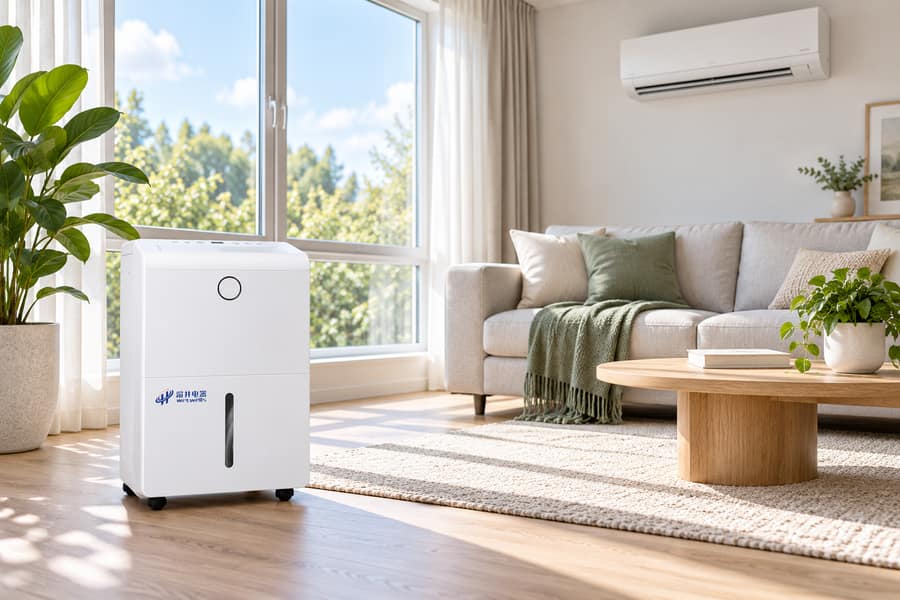
Using both appliances allows homeowners to manage temperature and moisture separately, although proper settings are important to avoid unnecessary energy consumption.
Benefits of Combining Both Appliances
More Consistent Humidity Control
An air conditioner handles the primary cooling load while the dehumidifier removes excess moisture when indoor humidity exceeds the selected target.
This combination is particularly useful when cooling demand fluctuates but moisture problems continue.
Improved Comfort at Moderate Temperatures
High indoor humidity can create an uncomfortable, clammy feeling even when the room temperature is acceptable.
A dehumidifier can reduce excess moisture without requiring homeowners to lower the air conditioner thermostat solely to address humidity.
Supplemental Moisture Management
Certain rooms may remain damp even when the main living areas receive adequate cooling.
Portable dehumidifiers can provide localized moisture management in basements, enclosed storage areas, or laundry rooms where additional cooling is unnecessary.
Flexible Seasonal Operation
During summer, the air conditioner may provide most of the required moisture removal.
During milder seasons, a dehumidifier can continue managing indoor humidity when the air conditioner operates less frequently.
How to Use Both Appliances Effectively
Proper coordination helps maintain indoor comfort while reducing unnecessary equipment operation.
- Set a Humidity Target: A practical starting point for many homes is approximately 40–50% RH, adjusted for climate and indoor conditions.
- Use the AC for Cooling: Allow the air conditioner to regulate room temperature rather than running it solely to reduce humidity.
- Use the Dehumidifier as Needed: Activate dedicated moisture removal when indoor RH remains above the desired range.
- Monitor Indoor Conditions: Place a hygrometer away from direct airflow, windows, and moisture sources for more representative readings.
- Ensure Proper Drainage: Keep water tanks, drainage hoses, and air conditioner condensate lines functioning correctly.
- Maintain Airflow: Clean filters regularly and avoid blocking appliance air inlets or outlets.
Maintaining indoor relative humidity around 30–50% is a commonly recommended approach for household moisture management. Humidity levels should generally remain below 60% to help reduce conditions associated with mold growth.
Lower humidity is not always better. Excessively dry air can reduce comfort, while damp surfaces may still require attention even when room humidity appears acceptable.
Homeowners should also address leaks, condensation, inadequate ventilation, and other underlying moisture sources rather than relying exclusively on mechanical dehumidification.
How to Choose Between a Home Dehumidifier and an Air Conditioner
Choosing the right appliance begins with identifying the main indoor problem: excessive humidity, high temperature, or a combination of both.
Room size, moisture sources, operating conditions, and existing cooling equipment should also influence the decision.
Which Appliance Is Best for Different Indoor Conditions?
The following comparison provides practical guidance for common residential environments.
| Indoor Condition | Recommended Solution | Main Reason |
| High humidity with comfortable temperature | Home Dehumidifier | Removes moisture without intentional cooling |
| High temperature and high humidity | Air Conditioner | Provides cooling and dehumidification |
| Cool and damp basement | Suitable Dehumidifier | Controls moisture without unnecessary cooling |
| Humid bedroom during mild weather | Home Dehumidifier | Maintains humidity independently of temperature |
| Hot home with insufficient AC dehumidification | AC + Dehumidifier | Provides supplemental moisture removal |
| Occasional humidity during summer | Air Conditioner | May provide sufficient moisture removal during cooling |
| Persistent whole-home humidity | Whole-Home Dehumidifier or Integrated HVAC Solution | Provides broader humidity management |
These recommendations assume correctly sized equipment and appropriate installation. Homes with unusual moisture loads or significant water intrusion may require additional investigation.
A dehumidifier is generally the preferred choice when moisture control is the main requirement and indoor temperature is already comfortable.
An air conditioner is often more practical when both high temperature and elevated humidity contribute to indoor discomfort.
Where existing cooling equipment cannot adequately manage humidity, supplemental or integrated dehumidification may offer a more flexible solution.
Key Factors to Consider Before Buying
Room Size and Moisture Load
The required appliance capacity depends on the room’s dimensions, ventilation, moisture sources, and existing humidity levels.
Larger spaces and persistent moisture problems generally require greater dehumidification capacity than small rooms with occasional humidity fluctuations.
Indoor Temperature and Relative Humidity
Measure indoor temperature and RH before deciding which appliance is necessary.
If the temperature is comfortable but humidity consistently exceeds the preferred range, a dehumidifier is usually the more suitable option.
If both temperature and humidity are high, air conditioning may address both problems simultaneously.
Dehumidification Capacity
When purchasing a dehumidifier, compare its rated moisture removal capacity with the expected conditions in the intended space.
Capacity ratings should be interpreted alongside their test conditions because actual moisture removal changes with temperature and relative humidity.
Selecting suitable capacity helps avoid equipment that struggles to maintain the desired humidity level during periods of high moisture demand.
Energy Efficiency
Review the appliance’s energy performance information and consider how frequently it will operate.
For dehumidifiers, compare IEF ratings under equivalent test standards. For air conditioners, review the appropriate cooling efficiency metric for the equipment category.
Choose equipment based on the required function rather than assuming that lower wattage always produces lower total operating costs.
Noise Levels and Placement
Noise is especially important when selecting appliances for bedrooms, home offices, and living rooms.
Consider fan operation, compressor noise, vibration, and the distance between the appliance and frequently occupied areas.
Proper placement should provide sufficient airflow without obstructing passages or creating unnecessary noise near seating and sleeping areas.
Drainage and Maintenance
Home dehumidifiers commonly offer removable water tanks, continuous gravity drainage, or optional condensate pumps.
For areas requiring frequent or extended operation, continuous drainage can reduce the need for manual tank emptying.
Air conditioners also require functioning condensate drainage and regular maintenance to preserve cooling and dehumidification performance.
Humidity Control Features
A built-in humidistat allows a dehumidifier to respond automatically to changes in indoor relative humidity.
Other useful features include automatic defrost, adjustable fan speeds, timer settings, and automatic restart, depending on the intended application.
For air conditioners, consider dedicated dry modes, variable-speed operation, and humidity control capabilities where available.
Ultimately, a home dehumidifier is generally better for maintaining consistent indoor humidity, while an air conditioner is better suited to cooling spaces that also require moisture removal.
Use the home’s measured temperature and RH, together with its moisture sources, to guide the final equipment choice. Monitoring temperature and humidity, correcting moisture sources, and selecting properly sized equipment will produce more reliable results than choosing either appliance based on cooling or dehumidification capacity alone.