
A quiet commercial dehumidifier needs to remove enough moisture without making the room unpleasant to use. The best choice depends on the sound reaching occupants, the way the unit starts and stops, and the installation around it. A single decibel figure rarely answers all three questions.
Hotels and offices make this especially important. A steady fan may be unobtrusive in a busy lobby but noticeable in a bedroom at night. A machine that seems acceptable during a site visit can become distracting when conversations stop and the rest of the building grows quiet.
A Commercial Dehumidifier shortlisted for quiet rooms still needs enough drying output in its proposed occupied-hours setting. Buying a small unit or using its lowest fan setting is not a reliable solution if the room stays damp or the equipment must run continuously to compensate.
Our commercial dehumidifier buying guide covers the other selection decisions that need to accompany an acoustic brief.
Define Where Quiet Operation Actually Matters
Begin with the locations where people will hear the equipment. A guest’s pillow, a reception desk, and a meeting-room seat are more useful assessment points than a convenient position beside the cabinet. Include adjacent rooms if walls, ceilings, or shared ducts provide a path for sound.
Identify the hours when the space is most sensitive. Bedrooms need attention during the night, while meeting rooms may need quiet during calls and presentations. A basement used only by maintenance staff can have different priorities, even when it serves the same building.
Describe the Complaint You Want to Avoid
Noise is not always a simple question of overall loudness. Occupants may notice a low hum, a rattling panel, a sudden start, or air whistling through a grille. These sounds can require different remedies, so describe the concern rather than asking only for the quietest available model.
If an existing unit is already installed, record when complaints occur and which operating mode is active. Listen with the normal room systems running and again during quieter periods. The pattern helps distinguish equipment noise from airflow, vibration, and unrelated building services.
- Sensitive positions: Mark beds, workstations, meeting tables, and adjacent occupied rooms.
- Sensitive times: Identify overnight periods, calls, presentations, and other quiet activities.
- Existing background: Note ventilation, traffic, lifts, and other services that affect what people hear.
- Required performance: State the humidity range and operating conditions that must still be maintained.
Read the Test Details Behind the Noise Rating
First establish which acoustic quantity appears on the data sheet: sound pressure or sound power. A sound-pressure reading belongs to a particular listening or measurement position, so the room and distance affect it. Sound-power data instead characterize the acoustic energy emitted by the source using the specified test procedure. Keep these two types of rating in separate columns until the supplier provides a valid comparison.
A figure expressed in dB(A) uses frequency weighting, but the label alone does not tell you the test distance, room conditions, or operating state. Two values may look comparable while describing very different tests. Request the supporting details before deciding that one unit is quieter.
Keep the Measurement Conditions Together
Record the operating mode, fan speed, measurement distance, and applicable test method beside each acoustic figure. Establish whether the compressor was running and whether other equipment was included. Where suppliers provide different forms of data, ask them to explain how the proposed installations can be compared fairly.
Decibels use a logarithmic scale. Do not add or subtract ratings as ordinary quantities to predict a room result, and do not treat a small numerical difference as a universal promise about how occupants will react. Room acoustics and the character of the sound also matter.
A supplier that explains the limits of its measurement provides a better basis for selection than one offering an isolated low number. If the room is especially sensitive, ask for an acoustic assessment or an agreed on-site trial rather than relying on a brochure alone.
Check Performance in the Mode You Plan to Use
Quiet modes often involve changes to fan operation, though the details depend on the model. Lower airflow may reduce noise while also changing moisture-removal performance. Ask for the capacity and permitted operating conditions in the exact mode proposed for occupied hours.
A quiet setting is useful when it can maintain the required environment. It is less useful if staff must repeatedly switch to a louder setting to recover control. The selection should account for realistic moisture loads, including outdoor air, cleaning, occupancy, and entrance traffic.
Watch for Start-Up and Cycling Noise
A steady background sound can be less disruptive than repeated changes, but the experience depends on the room and equipment. Listen to a full operating sequence, including compressor start, fan changes, pump operation, and shutdown. A brief demonstration with only the fan running is incomplete.
Frequent cycling may involve sizing, controls, sensor location, or operating conditions. Review the controller behavior and room readings before attributing repeated starts to equipment size. Ask the supplier to explain expected control behavior and whether any settings can be adjusted safely without compromising compressor protection or humidity performance.
Oversizing is not automatically a noise solution. A larger unit may have a different acoustic output and operating pattern. Undersizing is not a solution either, because prolonged operation can make even modest noise more noticeable. Compare complete selections for the same moisture-control duty.
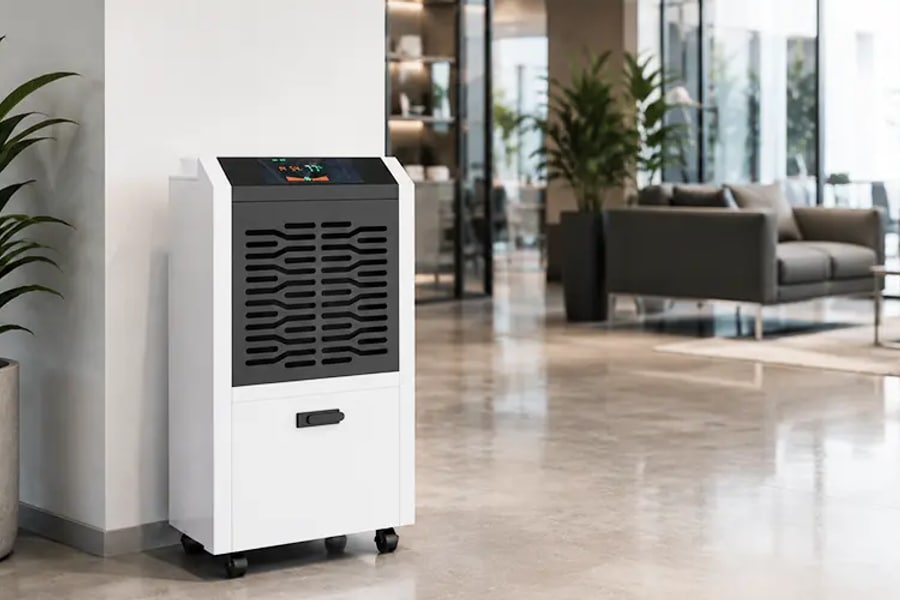
Choose a Suitable Location Before Choosing the Cabinet
Distance from occupants can help, but the unit still needs to exchange air effectively with the area it serves. Placing a portable machine in an isolated closet may reduce what people hear while preventing it from controlling the intended room. Noise and airflow must be planned together.
Keep the manufacturer’s inlet, outlet, and service clearances available. Furniture installed later can change both airflow and sound. A grille partly blocked by a cabinet or curtain may create turbulence, while restricted circulation can increase runtime and make the equipment more noticeable throughout the day.
Compare Room Units with Ducted Arrangements
A floor-standing unit offers straightforward access and flexible placement. A wall-mounted installation saves floor space but requires attention to structural vibration. A ducted arrangement can move the main equipment away from occupants, provided the ducts, grilles, supports, and service access are properly designed.
Concealing equipment above a ceiling does not make it silent. Sound can travel through ducts, ceiling openings, and structural connections. Access panels and lightweight partitions can also affect the result. Discuss the complete sound path with the designer before selecting concealed installation purely for acoustic reasons.
For hotels, avoid assuming that a service cupboard beside a bedroom is an acoustically safe location. For offices, check rooms on both sides of a partition. A location that works in the main space may transfer a problem to a quieter neighboring room.
Control Vibration and Airflow Noise During Installation
A mechanically quiet unit can become objectionable when vibration reaches a floor, wall, or ceiling. Mounting arrangements should follow the manufacturer’s instructions and the building design. Appropriate isolation needs to suit the equipment and support structure rather than being an improvised pad placed wherever convenient.
Check that panels, fixings, and transport components are handled according to the installation procedure. Loose parts can rattle, while rigid connections may transmit vibration. Do not modify the cabinet or internal mounts without the manufacturer’s guidance in an attempt to make a new unit quieter.
Avoid Restrictive Ducts and Grilles
Duct dimensions, bends, dampers, filters, and terminal grilles affect resistance and airflow noise. A small grille can look discreet while producing excessive air velocity or restricting the system. The selected fan must be able to deliver the required airflow through the actual installed resistance.
Sound attenuators may help in a designed duct system, but they add resistance and require space. Their suitability depends on frequency, airflow, maintenance, and installation. They should be included in the system design rather than added casually after the equipment has already been selected.
- Mounting: Confirm the approved support and any specified vibration isolation.
- Connections: Review routes that could carry vibration into the building structure.
- Air terminals: Select grilles and diffusers for the required airflow and acoustic objective.
- Access: Preserve room to inspect filters, fans, drainage, and mounting components.
Do Not Overlook Pumps, Alarms, and Controls
The compressor and fan are not the only potential sound sources. A condensate pump may operate intermittently, sometimes when the room is otherwise quiet. Ask how drainage will work and whether pump sound is included in the acoustic information supplied for the proposed configuration.
Gravity drainage may avoid a pump where the building allows a suitable route, but it must be correctly arranged. Do not compromise drainage reliability merely to remove a sound source. For a pumped drain, review the pump position and supports with the installer and leave enough access to inspect it.
Confirm Overnight Behavior
Check display brightness, audible alerts, restart behavior, and controller settings for sleeping areas. These details can affect guest experience even when the measured operating sound is acceptable. Any option to dim a display or change an alert should be confirmed for the actual model rather than assumed.
Do not disable a protective alarm simply because it is inconvenient. Ask whether a fault signal can be directed to staff through a suitable control arrangement. The objective is to maintain a dependable response without creating avoidable disturbance in the occupied space.
Timer schedules also need care. Switching equipment off during quiet hours can allow moisture to accumulate precisely when ventilation or cooling changes. Test the proposed schedule against recorded room conditions before treating it as an acceptable permanent operating strategy.
Arrange a Trial That Resembles Normal Use
If noise is a decisive purchasing concern, agree a trial with representative equipment in the intended location. Use the proposed fan mode and include active dehumidification. Keep normal furniture, doors, and other building systems in their usual operating condition as far as practical.
Evaluate the result at the positions identified in the brief. Include a quiet period and a full operating cycle. Where objective measurements are needed, use appropriate instruments and a defined method; a casual phone reading may be useful for observation but should not become the contractual acoustic test.
Review Humidity and Sound Together
Record room conditions during the trial so that a quiet result cannot be achieved simply by reducing useful operation. If the room was already dry and the compressor rarely ran, note that limitation. The test should demonstrate an acceptable combination of noise and moisture control.
Ask several relevant users for focused feedback. A receptionist can comment on conversation at the desk, while hotel staff can assess the experience from a guest position. Record specific observations, such as a noticeable start or grille hiss, instead of collecting only a general good or bad rating.
| Trial item | What to observe | What it helps establish |
|---|---|---|
| Active drying | Fan and compressor operating together | Real working sound rather than fan-only sound |
| Start and stop | Changes across a complete cycle | Whether intermittent events disturb occupants |
| Adjacent rooms | Sound through walls, ceilings, and ducts | Whether the problem has moved elsewhere |
| Room conditions | Temperature and humidity during the trial | Whether quiet operation still performs the required task |
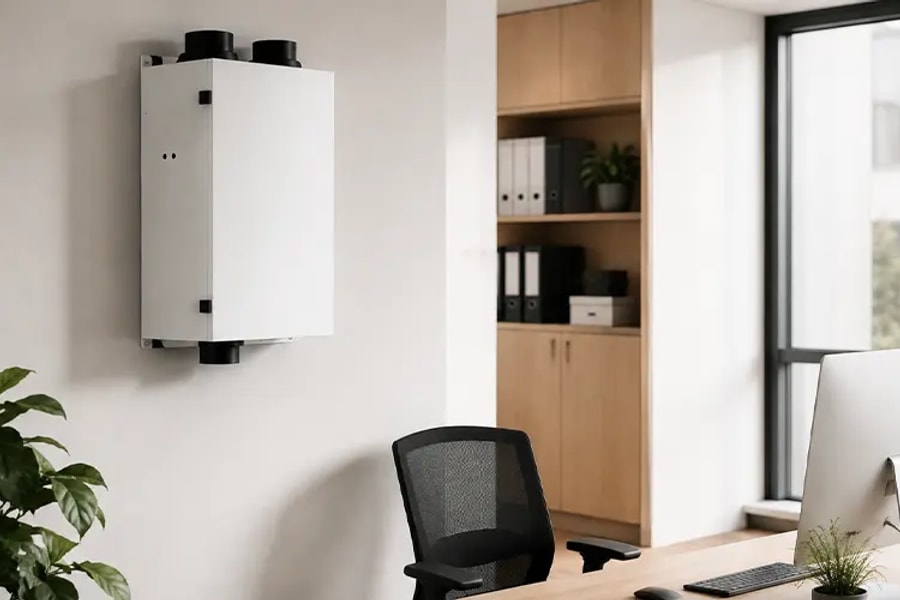
Maintain Quiet Operation After Handover
Noise can change after installation as filters load, fittings loosen, or airflow paths are obstructed. Report a newly developed rattle, hum, or whistle alongside the operating mode in which it occurs. Follow the manufacturer’s maintenance procedure and arrange qualified service when mechanical or electrical work is required.
Keep a simple baseline record of the selected mode, settings, and accepted operating behavior. This gives staff a reference when a later complaint appears. Use that baseline when checking whether a complaint followed a control adjustment or appeared without any setting change.
Give Staff a Clear Reporting Routine
Ask staff to record the time, operating mode, and location where a sound was noticed. Note whether the pump, compressor, or fan had just started. Short, specific observations make a service visit more productive than a report that the unit is sometimes loud.
Keep objects away from the cabinet and preserve the intended clearances. Do not use a dehumidifier as a shelf or push it behind furniture to improve appearance. Small changes to the surrounding space can introduce rattles, restrict airflow, and lengthen operation without any change to the machine itself.
Review recurring complaints with humidity performance and operating hours. If staff keep switching the unit off, the installation has not met its practical purpose even if the original laboratory rating was accurate. Address the source rather than relying on repeated instructions to tolerate the noise.
Send Suppliers an Acoustic Brief They Can Use
Provide the room layout, occupied hours, sensitive positions, normal temperature range, and humidity objective. Explain whether the equipment must remain in the room or can be located elsewhere. Include wall and ceiling constraints, drainage options, and any relevant acoustic requirement set by the project designer.
For a WetWells proposal, ask which installation format and operating mode suit that brief. Request noise data with its measurement conditions and the expected moisture performance in the same configuration. Where information is incomplete, agree what a trial or commissioning test must establish before acceptance.
Put the agreed assessment positions, operating mode, and acceptance procedure in the purchase scope. All three parties can then check the same room positions and operating sequence at handover. It also makes later decisions about placement, fan settings, and maintenance easier to resolve.