
Choosing the right refrigerant dehumidifier technology is essential for effective moisture control in industrial and commercial environments. Standard, LGR, and SLGR dehumidifiers provide different moisture removal capabilities based on humidity requirements, drying speed, and operating conditions.
Understanding the differences between these three technologies helps businesses select suitable dehumidification solutions for improving efficiency, controlling humidity levels, and reducing long-term operating costs.
What Is a Standard Dehumidifier?
A Standard Dehumidifier is a conventional refrigerant-based dehumidification system designed for general humidity control applications. It removes moisture from the air by cooling humid air below its dew point, allowing water vapor to condense into liquid water.
The working process is based on a basic refrigeration cycle:
- Humid air enters the dehumidifier.
- The incoming air flows across the refrigerated evaporator.
- Cooling causes airborne water vapor to collect as droplets on the metal fins.
- A collection tray directs these droplets into the drainage system.
- Before leaving the cabinet, the dried airstream picks up heat and flows back into the room.
Standard refrigerant dehumidifiers are widely used because they provide reliable moisture control with a simple structure, easy maintenance, and reasonable initial investment.
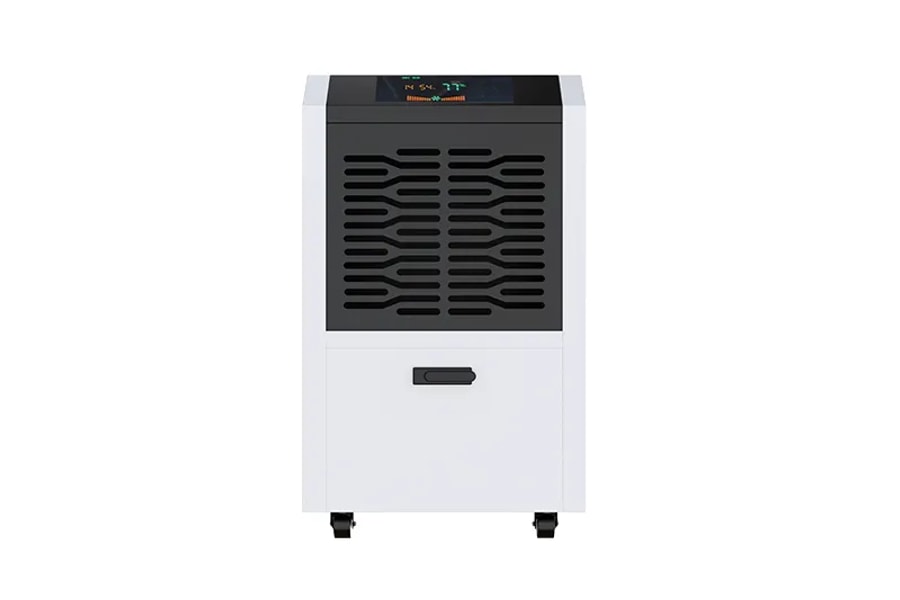
Key Features of Standard Dehumidifiers
General Humidity Control Capability
Standard dehumidifiers are designed for environments where moderate humidity reduction is required. They can maintain stable relative humidity levels in commercial and industrial spaces without requiring extremely dry conditions.
Simple Refrigeration Structure
Compared with LGR and SLGR technologies, standard systems use a simpler refrigeration process. The less elaborate design can simplify installation work, routine servicing, and component replacement.
Cost-Effective Operation
Standard dehumidifiers usually have lower equipment costs, making them suitable for applications where basic humidity control is the main requirement.
Wide Range of Configurations
Manufacturers provide standard dehumidifiers in different capacities, airflow designs, and installation methods to meet various application needs.
Advantages of Standard Dehumidifiers
Standard dehumidifiers offer several advantages:
- Lower initial investment.
- Simple maintenance requirements.
- Reliable continuous operation.
- Suitable for general humidity management.
- Available in different capacity ranges.
For applications where the objective is to maintain stable humidity rather than achieve extremely low moisture levels, standard dehumidifiers are usually an economical choice.
Limitations of Standard Dehumidifiers
Although standard systems work well for general applications, they have certain limitations.
Reduced Performance at Low Humidity Levels
As humidity decreases, the amount of moisture available in the air becomes lower. Standard systems may experience reduced moisture removal efficiency when operating in very dry environments.
Slower Drying Performance
For projects requiring rapid moisture removal, standard dehumidifiers may not provide the same drying speed as LGR or SLGR systems.
Limited Extreme Condition Performance
Standard models may not be suitable for applications requiring very low humidity levels, aggressive drying, or strict moisture control.
Common Applications of Standard Dehumidifiers
Standard dehumidifiers are commonly used in:
- Warehouses
- Commercial buildings
- Indoor swimming pools
- General manufacturing facilities
- Storage rooms
- Basements
They are ideal for applications where stable humidity control is required without extreme drying performance.
Understanding LGR Dehumidifiers
An LGR dehumidifier is an advanced refrigerant-based system designed to remove more moisture than a standard dehumidifier, especially when humidity levels become lower.
In drying work, moisture content is commonly expressed as grains of water per pound of dry air. A lower grain level indicates less moisture content. LGR technology allows the dehumidifier to continue removing moisture efficiently even after the air becomes significantly drier.
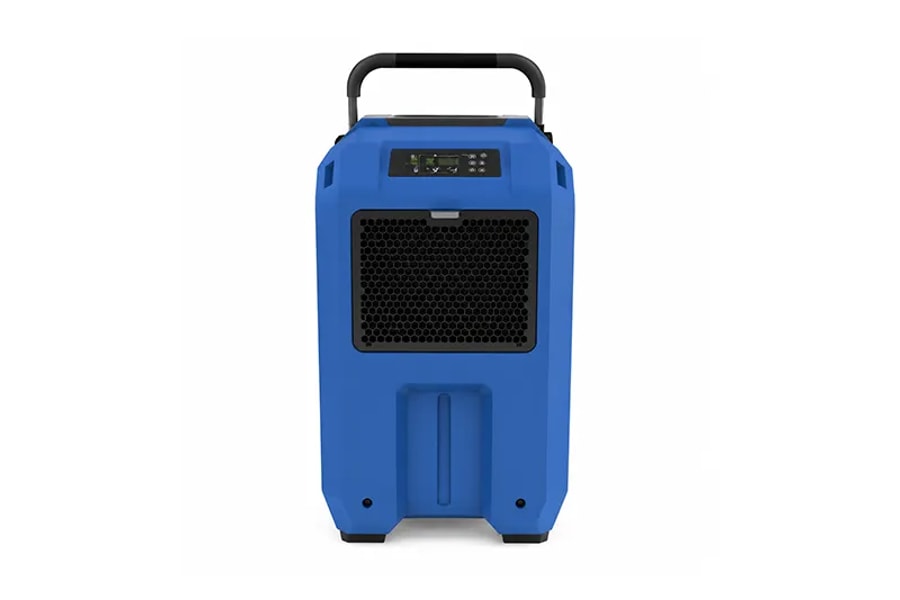
How LGR Dehumidifiers Work
LGR dehumidifiers improve moisture removal through enhanced cooling technology.
The general working process includes:
- Humid air enters the unit.
- Air passes through cooling components.
- Moisture condenses from the air.
- Additional cooling stages extract more moisture.
- Dry air is reheated before being released.
Compared with standard systems, LGR technology provides better performance in lower humidity conditions because it improves condensation efficiency.
Key Features of LGR Dehumidifiers
Higher Moisture Removal Capability
LGR systems can remove more water from the air compared with standard refrigerant dehumidifiers under similar conditions.
Better Low Humidity Performance
They are designed to continue operating effectively when humidity levels become lower.
Faster Drying Capability
Because of their improved moisture extraction ability, LGR systems can reduce drying time in demanding applications.
Professional Drying Performance
LGR dehumidifiers are commonly selected for professional applications where moisture removal speed and efficiency are important.
Advantages of LGR Dehumidifiers
The main advantages include:
- Higher moisture removal capacity.
- Faster drying performance.
- Better operation at reduced humidity levels.
- Suitable for demanding moisture control applications.
- Improved efficiency for drying projects.
Common Applications of LGR Dehumidifiers
LGR dehumidifiers are commonly used in:
- Water damage restoration
- Construction drying
- Industrial drying
- Storage facilities
- Moisture-sensitive environments
They are especially suitable for applications where reducing drying time is a priority.
Understanding SLGR Dehumidifiers
The designation SLGR adds subcooling to the low-grain refrigerant concept.
An SLGR dehumidifier is an advanced version of LGR technology that uses additional refrigerant subcooling to further improve moisture removal performance.
By optimizing the refrigeration cycle, SLGR systems can achieve lower moisture levels and provide higher drying efficiency compared with standard LGR systems.
How SLGR Dehumidifiers Work
SLGR technology combines LGR operation with an additional subcooling process.
Air moves through the system in the following sequence:
- The fan draws moisture-laden room air into the cabinet.
- Air passes through cooling coils.
- Moisture condenses from the air.
- Refrigerant subcooling improves cooling performance.
- Additional moisture is removed.
- Dry air is reheated and discharged.
This additional cooling process allows SLGR systems to provide superior drying performance in challenging environments.
Key Features of SLGR Dehumidifiers
Maximum Moisture Removal Performance
SLGR systems provide some of the highest moisture removal capabilities among refrigerant-based dehumidifiers.
Excellent Low Humidity Operation
These designs aim to sustain extraction as the surrounding air becomes drier.
Improved Drying Efficiency
SLGR technology can shorten drying time and improve overall project efficiency.
Suitable for Continuous Operation
Selected SLGR models support extended drying cycles; suitability depends on the unit and its specified operating limits.
Advantages of SLGR Dehumidifiers
SLGR dehumidifiers provide:
- Maximum refrigerant-based drying performance.
- Excellent low humidity capability.
- Faster moisture removal.
- Improved performance in difficult conditions.
- Better efficiency for professional drying applications.
Common Applications of SLGR Dehumidifiers
SLGR systems are commonly used in:
- Professional restoration projects
- Industrial drying applications
- Severe moisture environments
- Large-scale drying operations
- Low humidity production areas
Standard vs. LGR vs. SLGR Dehumidifiers: Key Differences
Standard, LGR, and SLGR dehumidifiers all use refrigerant technology, but their performance differs significantly in moisture removal capability, drying speed, operating conditions, and cost.
| Feature | Standard Dehumidifier | LGR Dehumidifier | SLGR Dehumidifier |
| Technology Level | Basic refrigerant technology | Advanced refrigerant technology | Enhanced LGR technology |
| Moisture Removal Capability | Normal | High | Very High |
| Low Humidity Performance | Limited | Good | Excellent |
| Drying Speed | Standard | Faster | Fastest |
| Initial Equipment Cost | Lower | Medium | Higher |
| System Complexity | Simple | Moderate | Advanced |
| Maintenance Requirement | Easy | Moderate | More Technical |
| Best Application | General humidity control | Professional drying | Extreme drying requirements |
Standard vs. LGR vs. SLGR Dehumidifier Cost Comparison
The cost of a refrigerant dehumidifier depends on capacity, airflow, technology configuration, control system, installation requirements, and customization level.
Advanced technologies generally require higher investment because they include more complex refrigeration designs and improved moisture removal performance.
| Dehumidifier Type | Typical Price Range | Cost Characteristics |
| Standard Dehumidifier | $1,000–$20,000+ | Lowest initial cost, suitable for general humidity control |
| LGR Dehumidifier | $2,500–$40,000+ | Higher investment due to improved moisture removal capability |
| SLGR Dehumidifier | $8,000–$100,000+ | Highest cost for maximum drying performance and advanced technology |
Actual prices vary depending on capacity, application conditions, customization requirements, and manufacturer specifications.
Which One Should You Choose?
Selecting between standard, LGR, and SLGR dehumidifiers depends on humidity targets, drying requirements, operating environment, and budget considerations.
Choose Standard Dehumidifiers When:
Standard dehumidifiers are suitable when:
- General humidity control is required.
- Extremely low humidity is unnecessary.
- Initial equipment cost needs to be controlled.
- Room temperature and moisture loads stay reasonably consistent.
Recommended applications:
- Warehouses
- Commercial spaces
- Indoor pools
- General production areas
Choose LGR Dehumidifiers When:
LGR dehumidifiers are recommended when:
- Faster moisture removal is needed.
- Lower humidity levels are required.
- Drying efficiency affects project costs.
- The environment has higher moisture loads.
Recommended applications:
- Water damage restoration
- Construction drying
- Industrial moisture removal
- Storage protection
Choose SLGR Dehumidifiers When:
SLGR dehumidifiers are suitable when:
- Maximum drying performance is required.
- Extremely low humidity conditions are necessary.
- Drying time is a critical factor.
- The application requires advanced moisture control.
Recommended applications:
- Professional restoration
- Industrial drying projects
- Critical humidity environments
- Specialized manufacturing processes